
FuturEcology & EmGuard ™ August 2026
Lambs and Daffodils. Spring must be on its way.
Last Monday was “spud Monday”. In years past, it was actually a public holiday in Nelson, where traditionally potatoes were planted for the early crop. ‘Spud Monday’ – unique to Nelson | Top South Now
For us, it always heralds the hope that spring brings. Mind you, we had a week of wicked frosts following the planting of our potatoes, and many plants are showing signs of being hit with the frost. Frost can halt growth temporarily by damaging leaf tissue, which disrupts the plants’ ability to photosynthesise efficiently. Ice crystals puncture the plant cells, which can result in the leaves or flowers turning brown or black at the tips. We have noticed that Coprosmas get quite a purple tinge to the foliage when it is frost damaged.
Soil can also remain cold for long periods, limiting root activity and therefore plant growth.
Native plants have evolved under a range of conditions, and many are well adapted to the harsh conditions that can be found around the country. Some of these adaptations include tolerance to freezing temperatures, deep or fibrous roots that recover quickly, compact low growing forms, small leaves and the ability to grow in cold soils and short growing seasons.
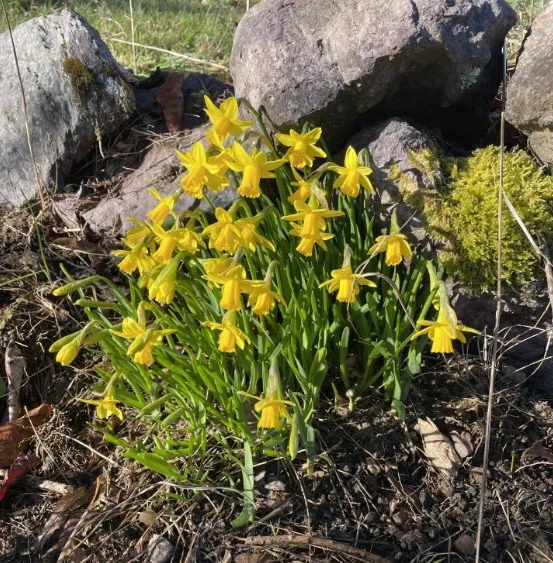
Choosing the right plant for the right place is the key to plant establishment in frosty areas.
Some sound choices include:
Phormium cookianum or mountain flax – a tough frost tolerant flax that will survive even snow conditions.
Chionochloa rigida (Snow Tussock) - this survives harsh frosts, winds, cold soils and is good for stabilising banks.
Compact alpine shrubs and hebes that have small leaves, low growth habits and tolerate frost, snow, wind and cold soil.
Leptospermum scoparium (Mānuka) – Resilient tree that thrives in cold conditions.
Astelia nervosa ‘Westland’ – with a robust clumping habit and strappy foliage, it will cope with cold and heavy frost. Other Astelias are less tolerant to cold, but are adaptable to a range of other seemingly difficult conditions.
Coprosma rugosa and Coprosma propinqua – both have wiry form and small leaves, enabling them to tolerate frosty areas.
If you are faced with a frosty site, good preparation before planting is a must.
Ensure the soil is well drained to prevent the roots becoming waterlogged and cold. Create raised beds or mounds to assist in areas that are poorly drained.
Mulching around the base of the plant using an organic mulch or wool based mats will help insulate the roots. Make sure, however, that the mulch allows drainage, to ensure water does not freeze.
In spring, it may pay to pull mulch back slightly from the tree base to reduce fungal issues, if they are a potential problem.
We recommend early planting in the autumn, if soil moisture allows, to give plants a chance to establish sound roots and have hardened off before the frosty winter period. In very cold areas, planting after the last frost is recommended.
Group trees and shrubs together, so they provide shelter for each other. Position taller, frost hardy species on the windward side to shield smaller plants.
Frost cloth or other methods of protection may be required in the early days. EmGuards do provide some degree of protection inside the guard, but are not designed for complete frost protection.
Use a mix of plants from low, mid to tall plants to reduce wind chill effects. Once plants are established and providing shelter, it is possible to sneak in the more frost tender plants.
The pine pollen has started, and so my poor old lungs are reacting. This is the time of year when we often try to sneak away for a short break to somewhere warm that doesn’t have pine trees!
We are away for the next two weeks in Perth, not necessarily warm, but we have a family wedding to go to, with family congregating from all over the world. Happy times.
We will still be contactable by phone and email, and will get EmGuard orders away as promptly as possible.
Keep up the good work.
Project Update
By Robert Fryer.
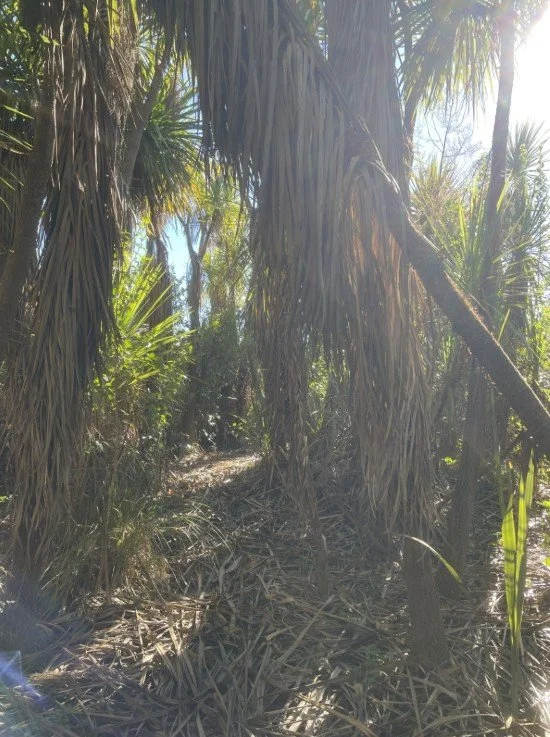
Cabbage trees planted by us 10 years ago.
August has been a month of working through some of our projects, quietly augmenting plantings with climax species. Attention is being paid to getting more podocarps in where appropriate, along with beech in the higher and drier aspects. I enjoy this work immensely, as it allows time to think and imagine what these areas will look like in years to come.
Something I am noticing amongst our plantings, although it is more a feeling I get as I walk through, is a feeling that I am being quietly watched over. A feeling that I am no longer the dominant being.
Let me explain. Several years ago, I was fortunate to see an exhibition at a favourite art gallery, Pataka in Porirua. If you have not been there, then make a special effort, as it is an amazing gallery space. The exhibition I really liked was called Papare Eighty.one, by Waiheke Island artist Anton Forde. The installation consisted of 81 hand carved Pou that you were able to walk amongst. Each had a presence, that left me feeling quite diminished amongst larger, more permanent beings.
I am now walking through groups of cabbage trees that are well over 3 metres in height, and they very much feel like they are sentinels watching over the plantings. It is quite a change from walking through, spotting potential amongst the grass, to an area that is becoming a forest with a life force of its own.
Several years ago, we were fortunate to assist with a planting with the Hira School, working with local artist Vicki Smith. The idea we wanted to communicate, was that we are not just planting trees, we are planting a forest.
Vicki was able to work with the children and engage them with those ideas. We wanted to turn a paddock into a lowland forest habitat that would support, amongst other things, our small forest birds such as grey warbler and shining cuckoo.
Five years on, and we are starting to see and hear the grey warbler using those Plagianthus. So I have no doubt, the shining cuckoo, ever the opportunist, will be there as well this summer. This project is like many others we have been a part of, that are starting to take on a new life, a new spirit and provide opportunities for others to grow and flourish.
Interesting Things.
An update from our key contractors, Forever Trees on the exciting project they have underway.
Planting trees in Africa?!

Yes you heard it right. John and Mandy from Forever Trees (www.forevertrees.nz) are working with seven reforestation projects across Kenya, Tanzania and Madagascar. They are taking small groups of keen tree lovers across to help out with these planting projects and experience Africa up close and personal. They have also set up the Forever Trees Trust, a non-profit organisation, working to generate funding to plant even more trees on these projects.
John will be giving a talk about The Forever Trees Trust, and the reforestation projects they are supporting in Africa and how you can be a part of the action!
So if you are in Nelson and love trees, come along to the WAA Club at 183 Bridge Street on Sunday evening, 16th August at 6pm.
Last month we mentioned the exhibition at the Nelson Museum.
TAKU RAU TĪKUMU
He whetū i te rangi, he whetū ki te whenua
I had a lovely message from one of our readers:
“I was delighted to be able to read the article on the exhibition at the Nelson Provincial Museum to my 86 year old Mum – the plant used is actually called Celmisia monroi [not monroe] as it was named after my great, great grandfather, Sir David Monro, who was an avid collector in the early days of European settlement in the upper South Island. We didn’t know that it was used like this, so it was lovely to see the photo and read your description of how it felt. (Toni)”
I had the privilege of meeting the weaver last week, at the opening of the new Arts Hub in Nelson. Such a lovely and interesting person. The exhibition is heading for Dunedin later in the year, so if you are from that area, go on in and have a look.
Plant of the Month
Pittosporum eugenioides
Tarata, Lemonwood.
This is a tree very commonly used in restoration plantings, due to its fast growth and resilience.
There are over 150 species, ranging from tropical Africa, through southern Asia, China, Japan, the Pacific Islands, Australia and New Zealand.
New Zealand has about 21 Pittosporum species. Most are small trees, with average sized leaves. About six are shrubs, with twiggy branches and small, variable leaves. Three of the species start with a juvenile phase, with small leaves that grow into a larger leaved adult state.
Notably, Pittosporums produce resin in ducts, and the leaves and other parts contain glands that produce aromatic oil.
Pittosporum eugenioides is a small tree up to 12m tall, forming a broad crown and a trunk up to 60cm in diameter. Bark is a pale grey and can be smooth to slightly rough.
It is found throughout the country (apart from the far north), in lowland and lower montane forest, generally on the margins and in second growth bush.
The leaves are 5-15cm long and 2.5-4cm wide, pale to yellow green with a smooth, shiny surface and an undulating margin.
The tree gets its common name from the fact that when the leaves are crushed, they give off a lemony smell.
Flowering occurs from mid-spring to early summer. Flowers are pale yellow, about 1cm in diameter, formed in clusters, with a sweet scent. These are pollinated by both insects and birds. Seeds are enclosed in a woody capsule, with a papery membrane inside. The seeds are held in with a sticky substance, which eventually dries and allows seed to be dispersed by birds.
Māori traditionally used the gum and crushed leaves for scent, hair oils and perfume, made by mixing the oil with bird fat. The gum could be chewed and used as a glue.
We have recently found that the wood, when burned, makes an incredible hot ember base. We had to remove a tree to build the new FuturEcology shed and the wood has been a revelation. It has burned hotter than any of the eucalyptus that we have traditionally burnt.
Not that we are advocating taking down trees, but if you do have one blow down or need trimming, do make use of the wood.
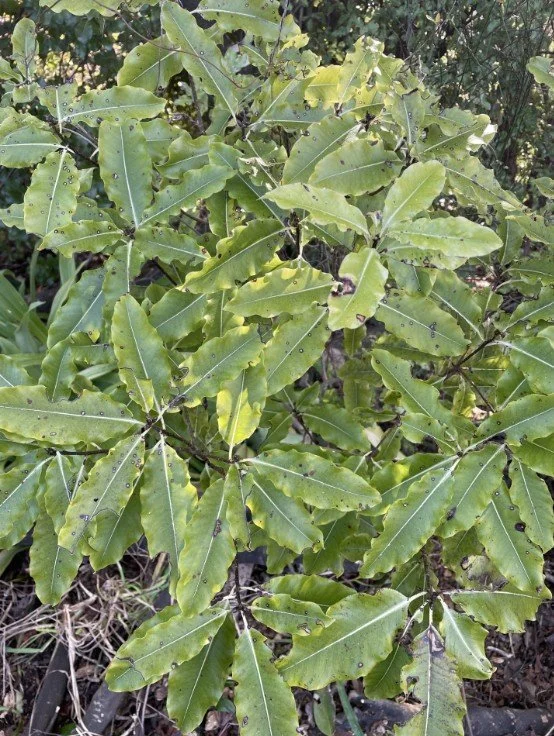
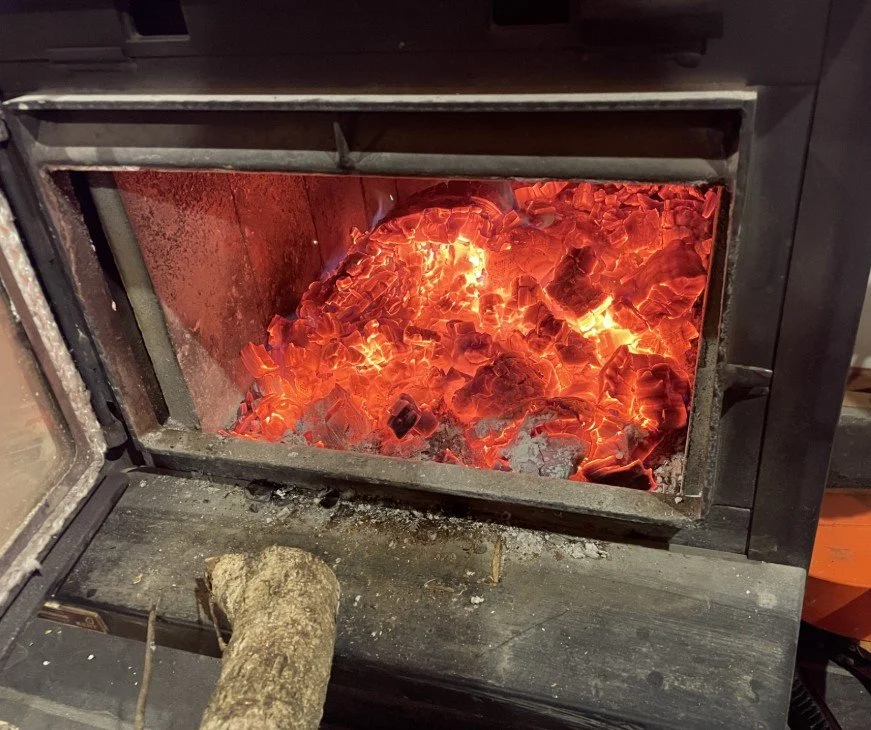
An amazing bed of pittosporum embers.
Weed of the Month
Paraserianthes lophantha (Formerly Albizia lophantha)
Cape Wattle
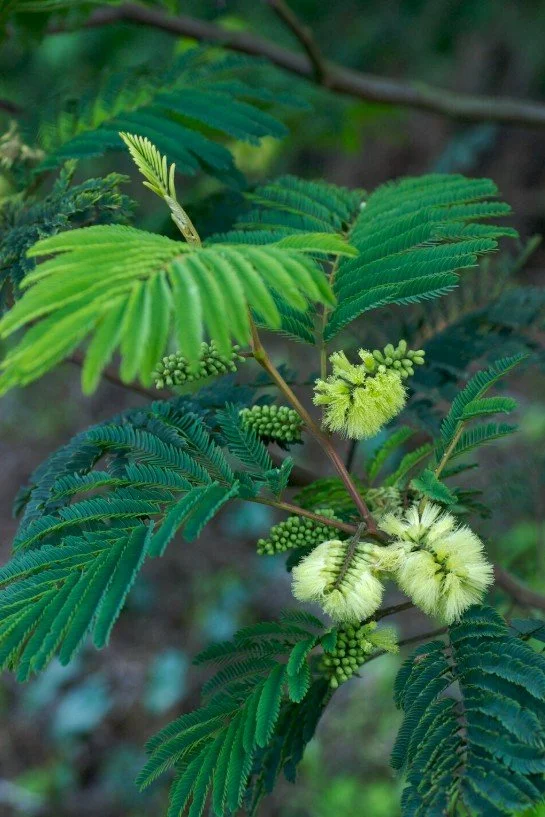
These are very evident right at the moment, as they appear to actively grow over winter and are looking fresh and green.
Growing as an evergreen shrub, to small tree, it looks very similar to an Acacia. It has hairy ribbed twigs and bronze, hairy young shoots. The leaves are alternate and frond-like, up to 30cm long, divided along the midribs with 8-15 pairs of main subdivisions, and 20-40 pairs of linear leaflets that are silky underneath.
The flowers resemble a bottle brush, tiny and numerous, green-yellow in colour. These are followed by flat, green-brown seed pods, 8-15cm long, with foul smelling seeds.
It is tolerant of a wide range of conditions, from high to low rainfall, poor soils, wind, salt and low fertility, although it prefers sunny conditions, rather than shade.
It grows and matures very quickly and produces many long-lived seeds, which are spread by soil movement and water.
Stumps will regrow.
Control:
Physically remove all small plants by digging up entire plant and disposing to landfill, fire or deep burial.
Cut N Paste all year round. Cut off as low as possible and cover the entire stem with a suitable chemical gel.
Drill and fill with a mixture of 50% glyphosate. Drill downward sloping holes, about 10cm apart, around entire trunk and fill holes with glyphosate mix.
You definitely don’t want this tree popping up in any of your restoration projects.
EmGuard Update
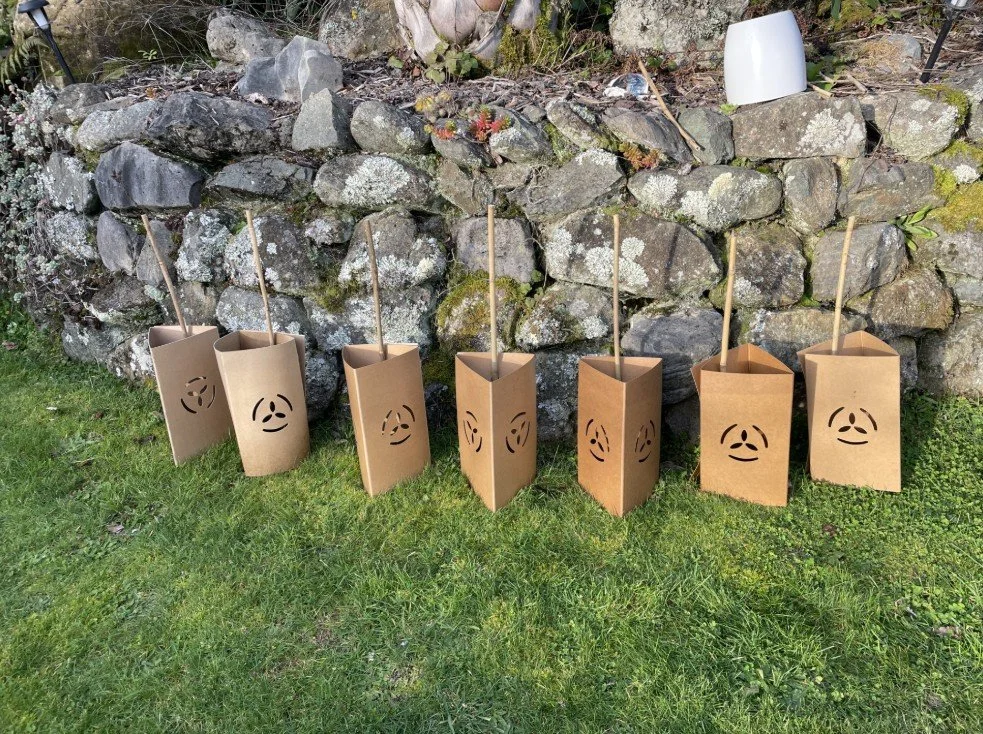
It’s a perfect time to be planting at the moment.
I have a soldier’s line up of EmGuards, that we are trialing, set up in the garden.
These are all from new sources of board and things are looking very promising.
We will definitely have the final one sorted shortly. The main difference is in price, so we are looking at the most cost effective and reliable source, to ensure we can continue to supply our great product to our many wonderful customers, at a fair and reasonable price.
We are away for a couple of weeks from the 15th August, but please keep in touch with your orders and we will get them processed as soon as possible. We have plenty of stock available.
Just a heads up that there will be an increase in the dagmat prices. This will be 5 cents (exc GST), bringing the cost to 85 cents (exc GST) for the 250mm by 250mm dagmats. This increase is due to the increased cost of the raw wool. This will take effect at the end of September.
Jan’s details are:
Ph: 027 497 5838
Interesting Snippets

What we’ve been reading
Orwell’s Roses. Rebecca Solnit
In past newsletters I have talked about humankind’s need for beauty.
This book was a recent read from the bookgroup I belong to. We all agreed that it was quite a challenging read. More like reading a thesis, but it was very interesting and generated lots of discussion.
Orwell brought us Animal Farm and Nineteen Eighty-Four. Interesting fact: apparently, he wrote Nineteen Eighty-Four in Nineteen Forty-Eight, so transposed the numbers to give a future date.
Solnit’s book was sparked by the author’s unexpected encounter with some surviving roses that Orwell planted in 1936.
She uses the roses, which are an understudied aspect of Orwell’s life, to journey the reader through his writings and actions. These include his involvement in the Spanish Civil War, researching life in the English coal mines, and critiquing Stalin when much of the international left still supported him. Apparently, Stalin had an obsession with growing lemons in Moscow. It then explores the relationship between lies and authoritarianism.
She draws some interesting connections between things like photographer Tina Modotti’s roses and her Stalinism. Orwell’s links to slave trading ancestors are explored, alongside the brutal rose industry in Colombia, that supplies the American market.
She links Orwell’s love of roses to a more hopeful person, as well as a reflection on pleasure, beauty and joy as acts of resistance.
It is well worth a read, especially in the interesting times we live in at present.
(Goodreads)
Conclusion
We live in interesting times indeed.
I liked the theme in Solnit’s book of how joy can be used as small acts of rebellion. It is about actively choosing to embrace positivity and resilience in the face of adversity. We watched a TV series and read another book about this very thing - A Gentleman in Moscow by Amor Towles.
The act of rebellion against the prevailing narratives of despair and oppression is a powerful form of protest, that can unite people and foster solidarity.
By choosing joy, you reclaim your right to exist fully and contribute to a collective narrative that values hope and possibility.
Spring is a great time to make that conscious decision to look for the joy in things.
Enjoy.

Winter reflections on our coldest day.
If you have any projects in mind and would like to talk further, give us a call or pop in and see us.
We look forward to hearing from you!