
FuturEcology & EmGuard ™ September 2026
Are the days speeding up?
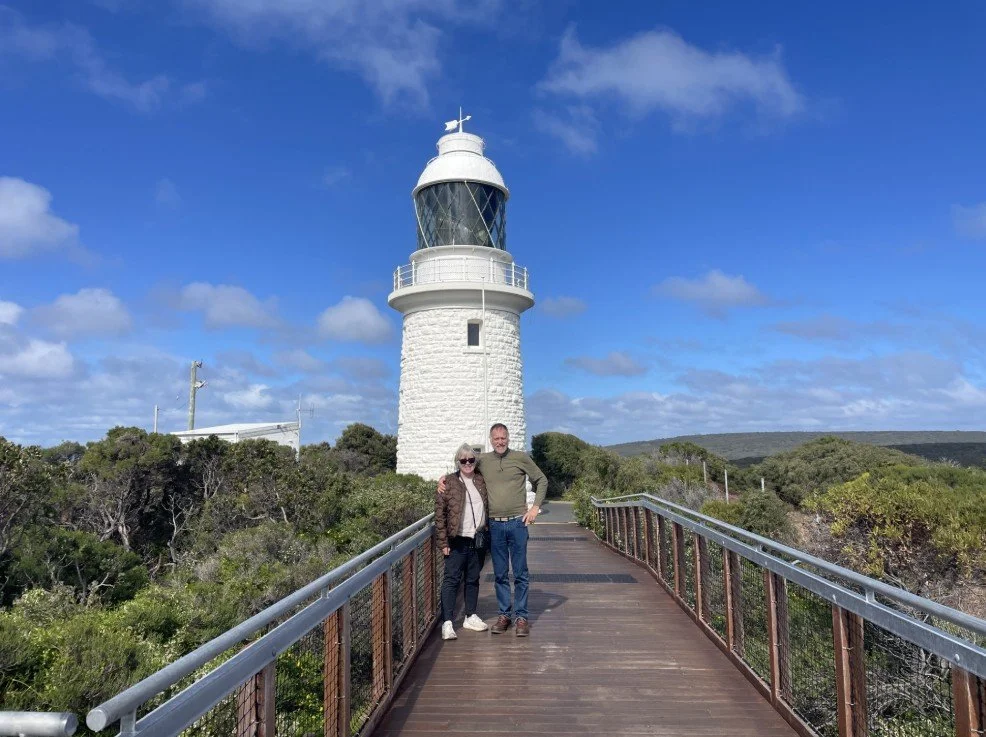
I can’t quite get over the fact that we are already halfway through September and last week it was only the 1st of July, I’m sure. We’ve had a month or two of disruption, including some great travel experiences to Perth for a family wedding, and Wellington to look after grandchildren.
It is always interesting to get out of our comfort zone and see different places and things. It was our first visit to Western Australia and somewhere we have been interested in for many years. We are always very keen on the botanical aspects of a place and how or what is being done for environmental projects.
It was interesting to see some EmGuard copies over in Perth. When we first started producing guards, we were approached by a company in Perth wanting exclusive distribution rights. That wasn’t in line with our thinking at the time and it is interesting to see how they tried to copy our product. They certainly don’t appear to have made much headway as we still saw far too many plastic guards.
The history of the Fremantle area was so interesting and we loved the effort that has been put in to keep most of the old town intact. The stonework is wonderful, as are the many stone lighthouses in the region. We have a particular love of lighthouses, having lived on Stephens Island with its lighthouse, many years ago.
As I write this, Robert has headed out to pick up a whole heap of plastic rubbish on the highway near our home. The roadside mower went through yesterday and turned the rubbish into thousands of pieces. The river is about 5 metres from the road edge and that river is the life blood of this area. The Nelson Magazine Nelson Magazine - 1 September 2026 | Top South Now did a wonderful article about the river in their September issue.
We know exactly where that plastic will end up, if left on the side of the road. Sadly, the plastic issue, that led us to developing EmGuards back in 2017, does not appear to have abated at all.
In Titahi Bay last week, as we walked along the shore, at the high tide mark there were thousands of pieces of micro plastic. I would possibly expect that in Asia, but not on a Wellington beach. Sustainable Coastlines Trust in Taranaki recently did a beach clean-up in South Taranaki. The volunteers picked up 1850 litres of rubbish and 95% of that was plastic.
As I drive into town every day in Nelson, I am confronted with a hillside of plastic plant guards. We began the battle to reduce plastic in the natural environment many years ago, but the message needs to be revisited again and again.
There are now many plant guard alternatives, not just our top-of-the-line EmGuards. We are often told that price is the barrier. What is the true cost, however, of something that must be physically removed and disposed of into landfill, where it will be forever?
As a community, we need to be addressing the plastic issue at every level. Councils should be writing it into their development manuals and policy documents. No plastic used in restoration projects in the natural environment would be a good step forward.
How can you consciously avoid using plastic? That is my challenge to you for the next two months.
It is always great to come home again after travelling and relook at our own place. We must always be grateful to live in New Zealand. Our stunning natural environment deserves all our efforts to protect it and cherish it.
Spring maintenance update
By Robert Fryer.
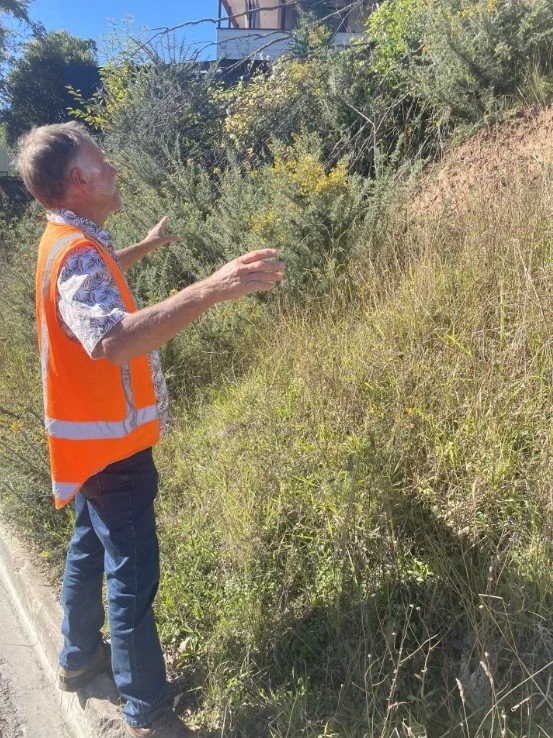
Assessing maintenance requirements.
Over the last few days, I have been appalled at the state of the roadside in our small piece of Nelson North. Roadside mowing had exposed and chopped up significant amounts of plastic and other trash. There was nothing for it, but to pick this stuff up and dispose of it correctly. Strangely, I find this task quite satisfying. A chance to walk beside the river, peer into it and enjoy its being. At our last premises, beside the local dairy, picking up discarded rubbish was always my start to the working week on Monday morning. Direct action, that does not cost much and really does make a difference.
While I was walking and rubbish collecting, I was thinking about our efforts to reduce plastic in our environment. Almost ten years ago, we started the journey with the EmGuard in an attempt to remove the plastic from environmental plantings. Our product is now well proven and copied, not very well, by all and sundry.
We do, however, often find ourselves needing to answer questions around the design and the need for the cutouts in the guard. The common question is around “why have the cutouts in the guard, if it is a spray guard?”
It is true that the guard offers protection from accidental herbicide overspray, but this is not the guards only function. Protection from vertebrate pests and the creation of a micro-climate being a couple of other obvious advantages.
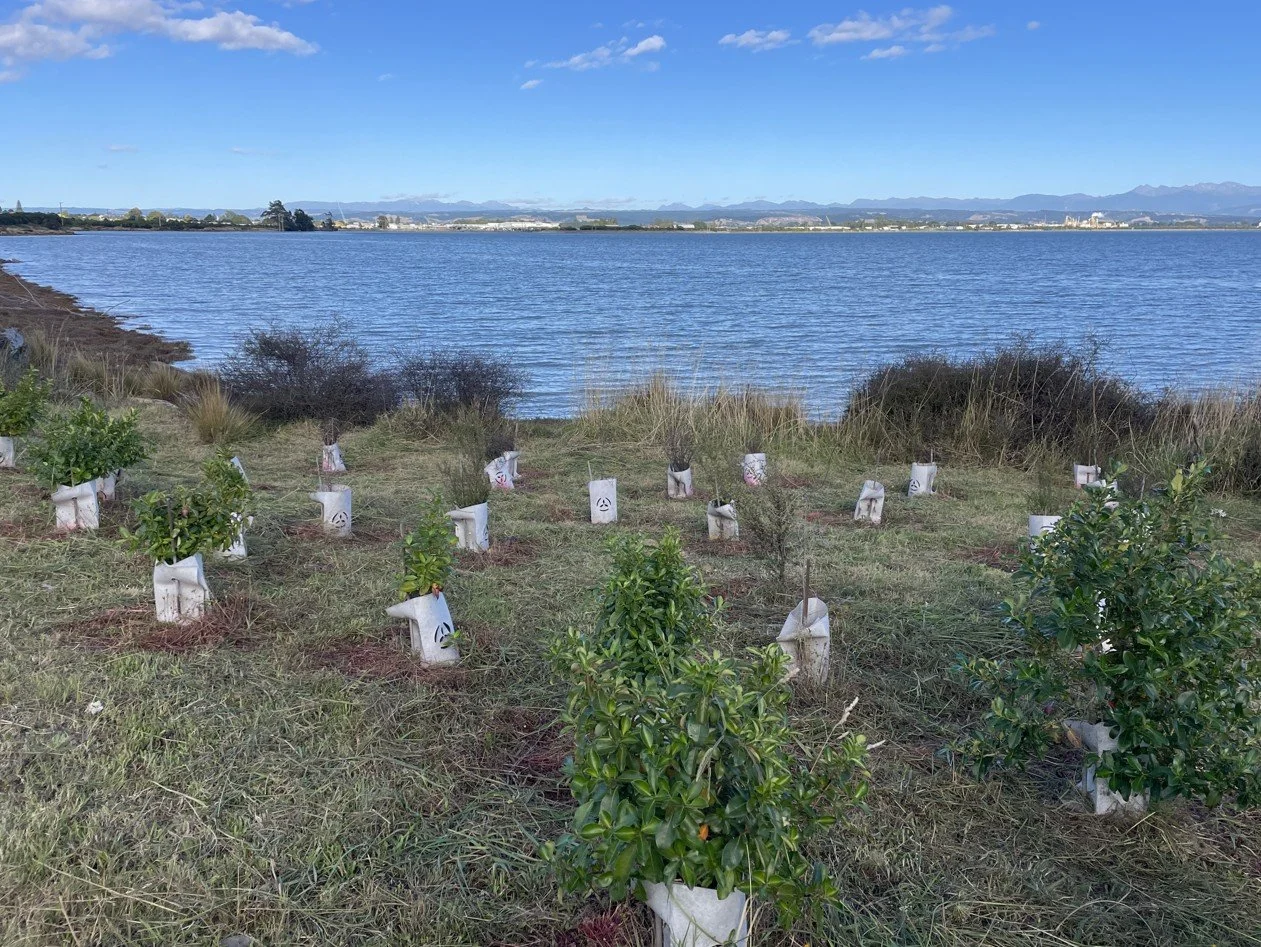
When it comes to spraying, this is where real spray experience does count. I found that with staff, a quick walk-through post and during spraying, revealed who was a little too casual in applying correct technique. If there is dye up the side of the guards, then there is need for further training.
We use a flat fan nozzle and low pressure on a knapsack sprayer. The correct technique is to apply the spray parallel with the edge of the guard, working outwards to the perimeter of the spray circle. Spraying in this manner avoids overspray onto overhanging foliage and damage to your expensive investment.
Once plants, such as grasses and flaxes, have grown out of the guard and have leaves draping on the ground, avoid spraying around them.
September is a great time of year to get your spray technique nailed. While our EmGuards do prevent some overspray, landowners and project managers do need to ensure that all operators are on the same page. The basic rules to follow in our experience are:
Use a flat fan nozzle, parallel to the guard
Walk through and see how much dye is on the guards and ask why
No Glyphosate around monocotyledons that have emerged from the EmGuard, eg Carex secta or Austroderia
Make sure that guards have been installed correctly in the first instance, with no foliage trapped under the bottom edge.
After investing in preparation, plants, planting, stakes and guards, it is important that spray release is done correctly, by skilled staff, to a satisfactory standard. Using plant guards, regardless of type, does not excuse reckless herbicide use.
The other main reason for the cut-out, aside from letting in light, is so that you recognize you have used a genuine, quality EmGuard, as the cutout is the logo for EmGuard.
Plant of the Month
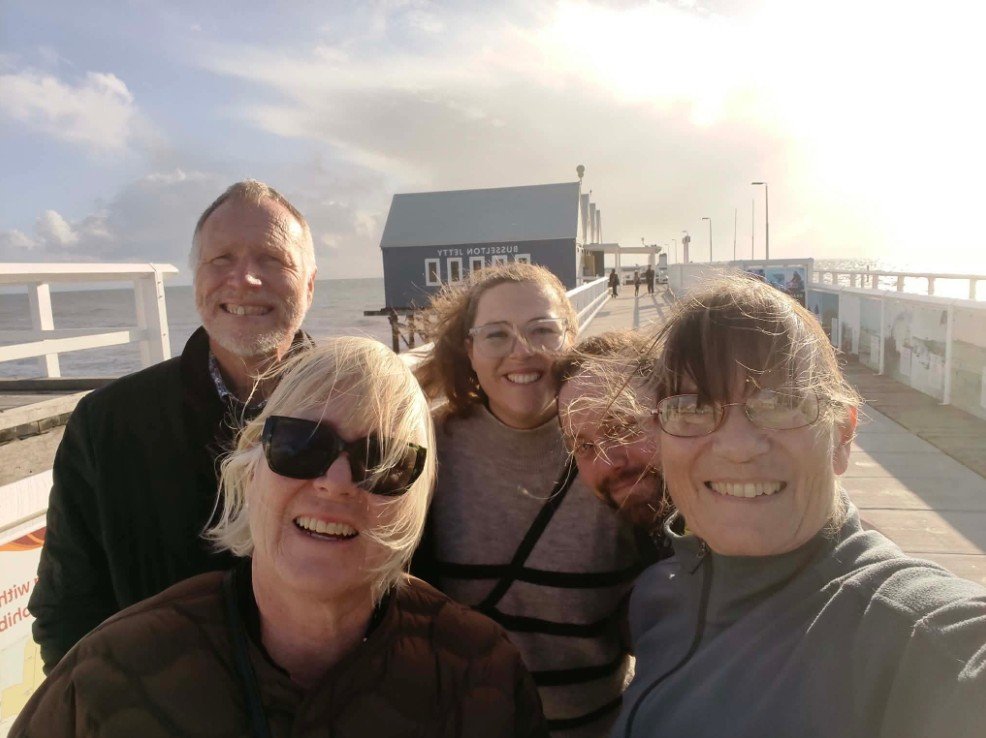
At Busselton Jetty, Western Australia. 1.84km long.
Eucalyptus marginata - Jarrah (Not a native)
By Robert Fryer
I have had a lifelong fascination with wharves and bridges, being fortunate enough in my younger days to spend a couple of years working on wharf construction. It was here that I got to work with and appreciate the beautiful big timbers of Jarrah, a large Eucalyptus from Western Australia.
There were once massive forests of this large tree in the southwest of Western Australia. We were able to visit the amazing Busselton Jetty, from where all this timber was shipped, to be used in bridge and wharf building across the world. In fact, even the London Underground utilised Jarrah timber that came from here. This tree has also played an extraordinary part in the development of New Zealand, enabling the construction of wharves and bridges throughout the country.
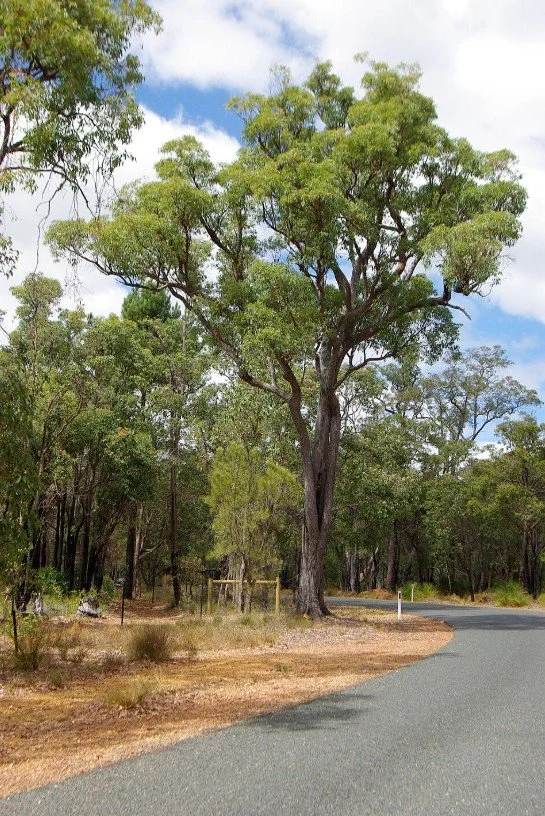
The Jarrah faces some challenges. It has been heavily logged, and the landscapes modified into farming and other industries. There are now excellent controls around remaining forests, but these still have challenges to overcome.
Jarrah dieback is a disease caused by Phytopthora cinnamomic, that is now causing an issue. This sounds very similar to our Kauri dieback problems in the North Island.
Because we can only see what is here now in front of us, we often forget and under-appreciate the huge contribution that trees have made to our lives. We are able to enjoy the standard of living we now have because these trees have enabled us to build the infrastructure we need today.
Periodically, we will see pieces of Jarrah recycled into landscape or decorative uses. It is good that the timber can continue to be reused and still be treated as a valuable asset. Beneath that cracked and silver exterior, there is a beautiful rich red timber, with a long and deep history, that is worth pause for thought.
Weed of the Month
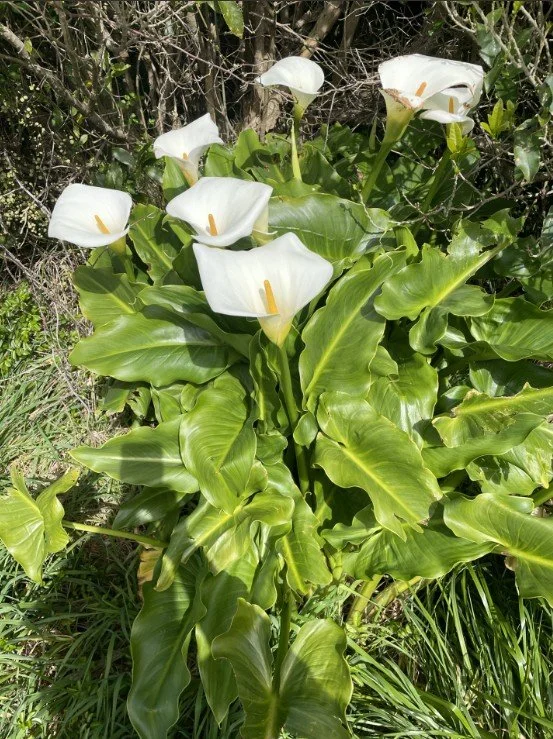
Zantedeschia aethiopica - Arum Lily
By Robert Fryer.
On our recent visit to Perth, we had the opportunity to head down to Margaret River for a couple of days. There were certainly some stunning landscapes and vegetation to try and make sense of, as it was so different to our forests.
One plant, however, really stood out - Arum Lily or Zantedeschia aethiopica. Great swathes of this plant were flowering and seemingly out of control. In farmland, grazing was quite obviously being reduced. In damper, forested areas the plant was widespread, no doubt out-competing what was supposed to be there. We found signs about the plant being a pest and groups dedicated to its eradication.
Back here in New Zealand, we have not seen infestations of the same scale… but we have seen the start of this in some parts of Nelson. It is a plant that we all collectively need to keep an eye on, and if we have the opportunity, reduce the risk if we can.
Interestingly, the Bay of Plenty Regional Council make a comment on their excellent website that “all parts of the plant are poisonous and it is one of the National Poison Centre’s top ten poisonous plants, being consistently involved in unintentional or childhood poisonings.”
It is a plant that in our experience is difficult to kill. Physical removal requires digging out all pieces, which is a difficult task. These pieces must be disposed to landfill, or deeply buried.
Weedbusters NZ notes that a mix of 1.5% Glyphosate and Metsulfuron methyl at 0.3 gms/l with a penetrant will work as a foliar spray. Care must be taken around waterways, if this is the chosen method.
I think the most important thing we can do as landowners or managers, is to quietly work at reducing these plants, year on year, before larger and more broadscale control becomes necessary.
EmGuard Update
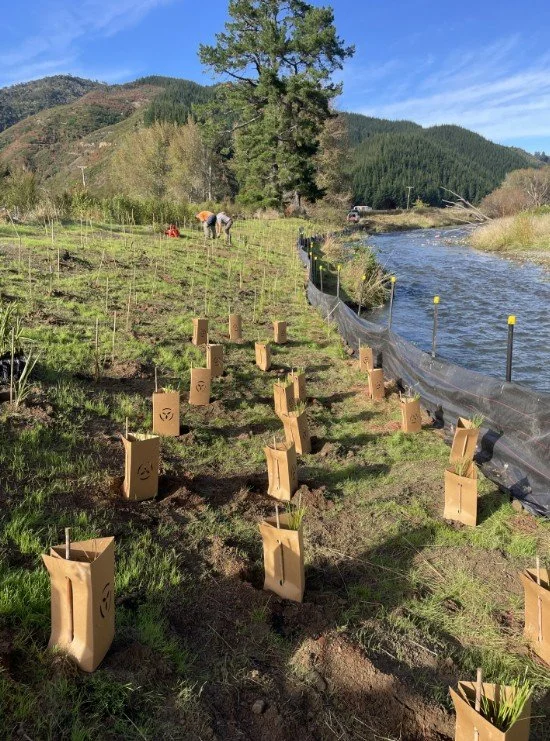
It is still good timing for planting, especially in areas that experience a damp spring.
We are close to signing a supply agreement for our future EmGuard supply, which is very exciting.
However, it requires some considerable crystal ball gazing for numbers for next year.
If you are ordering your plants now for next year, which you should be thinking about so nurseries can get them growing, you should also be thinking about protecting those plants.
If you have any idea of vague numbers for next year, can you please let us know.
We will be running a survey in the next couple of weeks, to get an idea of what people want in their plant guard and what drives their decision making. Please watch out for that and help us by answering a few quick questions.
We have ample supplies of everything including guards, dagmats and canes, so please let us know in good time for your needs.
As we move into the busy lead up to Christmas (I hate to say that word so early), lead times for freighting, especially to rural addresses can become longer.
Please allow at least a week, and up to 10 days for rural delivery. So, if you need guards urgently for a project, let us know as soon as possible, to ensure we can get them to you on time. Our freighters, Team Global Express, are great but they are also bound by weather and unforeseen issues like staff shortages and vehicle breakdowns.
Just a reminder again that the price increased from 1 July to $1.85 exc GST for EmGuards.
Wholesale rates for orders over 1500 (1 full pallet) have increased also by 5 cents per unit. Please enquire directly about qualifying for wholesale rates.
Bamboo canes are 32 cents each GST exc.
Dagwool mats are 85 cents each GST exc.
Freight is charged at cost.
Jan’s details are:
Ph: 027 497 5838
Climate action festival

September 18 to 27th - The Nelson Tasman Climate Action Forum is bringing a festival of events.
The Forum organises an annual Climate Action Festival to bring together and celebrate our community of change makers in Nelson Tasman.
There are a whole range of interesting events happening so check out their website for details.
https://www.nelsontasmanclimateforum.nz/projects/climate-action-week/and-festival/#
Interesting Snippets
What we’ve been reading
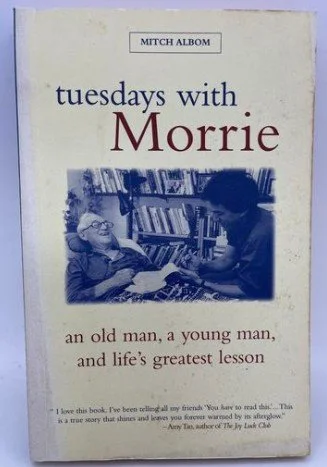
Tuesdays with Morrie by Mitch Albom (Another great find from Founders Book Fair)
An old man, a young man and life’s greatest lesson.
The meaning of life, taught by experience and a life well-lived.
This is the story of a college professor, Morrie Schwartz from Brandeis University, Massachusetts and a past student of his, Mitch Albom, and their discussions about the meaning of life and legacy.
Morrie is diagnosed with a terminal illness, amyotrophic lateral sclerosis, a brutal, unforgiving illness of the neurological system in 1994. He describes it as being like a lit candle, it melts your nerves and leaves your body like a pile of wax.
Morrie made the decision, as he left the doctors office “Do I wither up and disappear, or do I make the best of my time left”. He decided then to make death his final project. Morrie would walk the final bridge between life and death and narrate the trip.
Mitch reconnected with his professor at this point. “The last class of my old professor’s life took place once a week at his house, by a window in the study, where he could watch the natural world outside”.
No books were required, no grades given, but there were oral exams each week, where Mitch was expected to respond to questions and pose questions of his own.
They covered many topics including love, work, community, family, aging, forgiveness and finally death.
The book is wonderfully and thoughtfully written and a great opportunity to sit and reflect on your own life.
“A teacher affects eternity: he can never tell where his influence stops” Henry Adams.
Conclusion
For some reason, my reading seems to be focused on the meaning of life and our final destination. It is probably related to the fact that retirement age is fast approaching, and we have lost a number of family and acquaintances in the past few years.
The flu season has been horrific in the country this year and we were not immune to it here.
A local nursey owner died suddenly earlier this month and our hearts go out to her family.
Robert has been quite unwell with the flu, which is very difficult for someone who finds it very hard to sit still.
However, spring is here, life moves on and every day there is another joy to see, whether it is a leaf emerging on a bare branch or the sound of the birds welcoming a new day with all their being.
A huge thank you to Adrienne Matthews from the Nelson Magazine, for the lovely article she wrote about the Wakapuaka River and some of the people, including us, who have been involved in its restoration journey. The link is earlier in the newsletter.
We have so many wonderful people throughout the country, who have taken up the mantle of caring and nurturing our environment. Keep up the great work and keep up the pressure on our leaders to recognise that without our environment, we are nothing.
Appreciate all the little things every day, and listen out for the shining cuckoos who have arrived, heralding the arrival of summer.
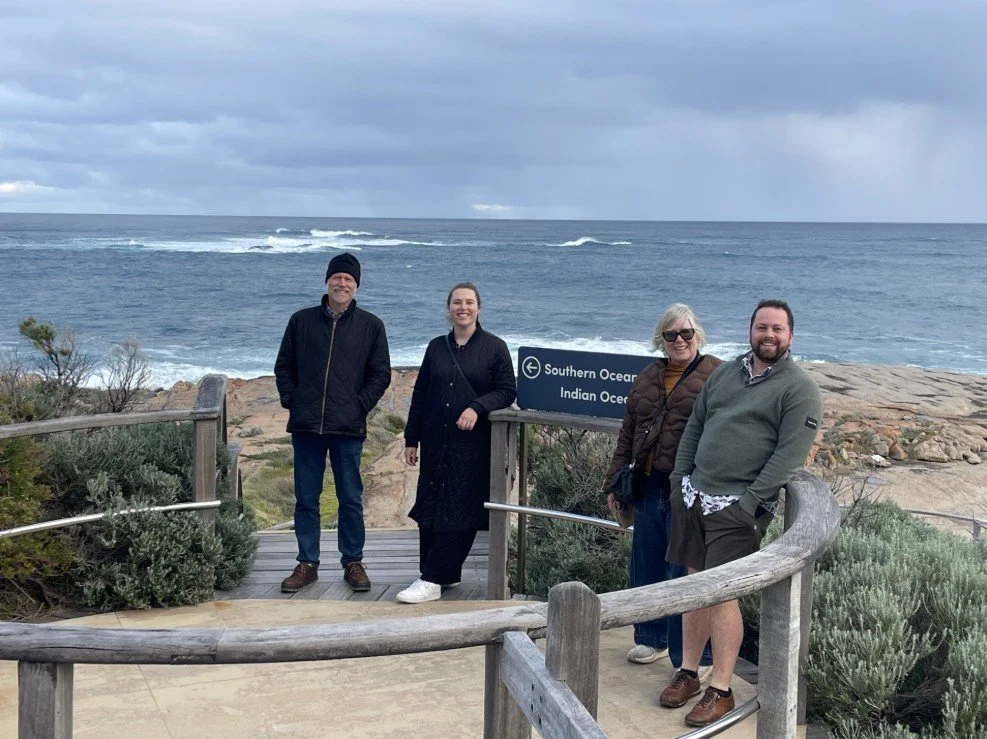
At Cape Leeuwin, where the Southern Ocean meets the Indian Ocean.
If you have any projects in mind and would like to talk further, give us a call or pop in and see us.
We look forward to hearing from you!