
FuturEcology & EmGuard ™ July 2026
It was a celebratory day yesterday, the 8th July. Firstly, it's Emma's birthday and also the 12th anniversary of establishing FuturEcology.
We set out to save the planet, one tree at a time and we can honestly say that we think we have made a difference.
Many people have joined us on that journey, and we thank you from the bottom of our hearts. We couldn't have done it without you.
We will keep on going, as there is much more to do, but we are certainly going to celebrate our achievements over the last 12 years and enjoy seeing all those forests we created, growing onwards and upwards.
We’re past the shortest day- Hooray!!
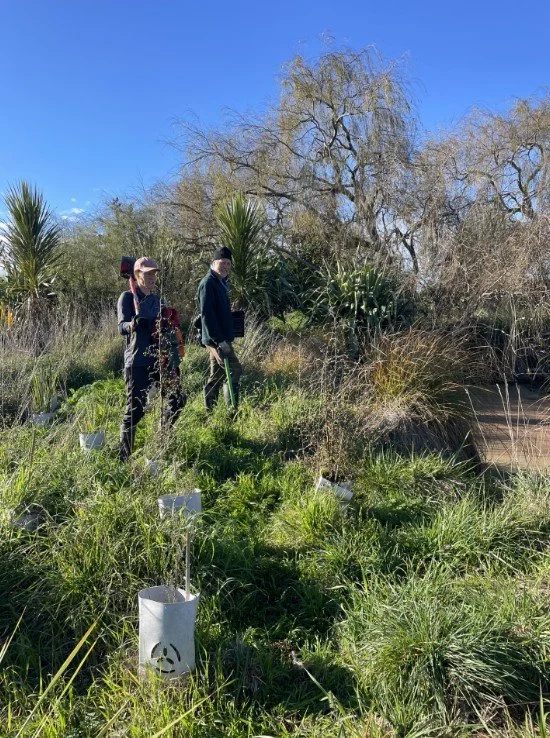
Have you got your garlic in to mark the beginning of the new growing season, even though we generally get our worst weather for the next few weeks. However, those few extra minutes of daylight creeping in are a good feeling.
I picked up a book the other day called “The Wealth Money Can’t Buy” by Robin Sharma. I thought I might need some wisdom around that, especially in the dead of winter. He has some really interesting and candid advice. I think those of us who get a kick out of planting trees and growing things are definitely on the road to developing the wealth that money can’t buy. He makes a point about starting things and his advice is just to start. One page at a time, one tree at a time or whatever it is you want to do, the key is to just start small and then keep going. That one tree will eventually be part of a forest.
He also talks about how all change is hard at first, messy in the middle and gorgeous at the end. For me that certainly captures the essence of trying to establish new forests and restore habitats.
That 2-3 year stage, where it all looks a bit untidy and you have had a few floods or setbacks, is often when you wonder whether it is worth it. Then suddenly you are out the other side and your forest is starting to work out what it is there for.

We were in a wetland in Marlborough last month, that we started working on about 5 years ago. We are still pushing further into the hard stuff, but the original plantings are looking so good. We have made a pathway through it so the owner, Jane Hunter, from Hunters Wines can go and enjoy seeing the fruits of her vision. Thanks, Jane, for letting us be part of your legacy.
Robin Sharma recommends getting out in nature, being mindful and in the moment, so you can recharge your soul. Most importantly, leave the phone behind! The weather might be a bit against you at this time of year, but grab the moments that you can.
We had a day of being tourists in our own town last month. Exploring the Museum, the Suter Art Gallery, An Art Exhibition – Changing Threads, the best bookshop in town and some delicious food in the local cafes. I recommend a similar adventure, especially in the dead of winter.
Stay warm and start planning your spring gardens or your next adventure. In the meantime take the time to devour some good books, while the weather rages away outside.
Interesting Things
The Nelson Provincial Museum has a fascinating exhibition on at present.
TAKU RAU TĪKUMU
He whetū i te rangi, he whetū ki te whenua
A star in the sky, a star on the earth
9 April - 19 July
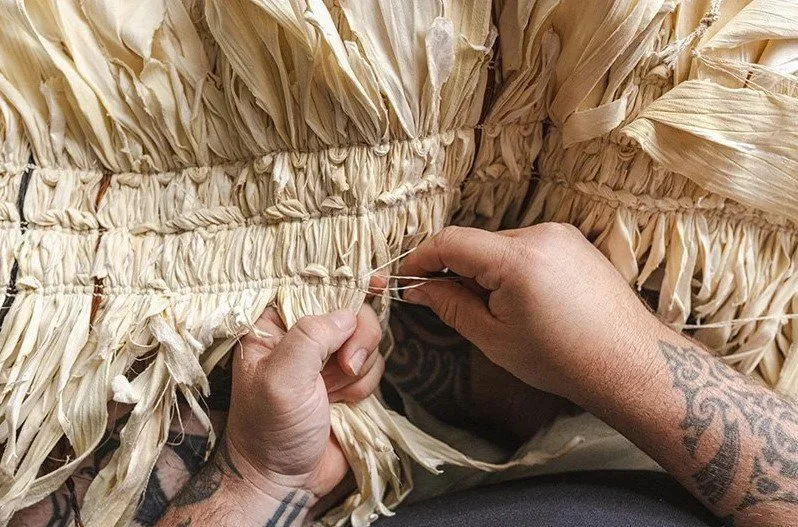
Taku Rau Tīkumu explores the enduring relationship between people and alpine landscapes through the story of tīkumu - a resilient mountain plant bound to generations of knowledge, skill, and care. Bringing together the largest collection of tīkumu taonga ever exhibited, it weaves mātauranga Māori, science, oral histories, photographs, and rare records to reveal how this alpine plant carries intergenerational knowledge across Te Waipounamu.
This is the mountain daisy Celmisia Monroe, found in the alpine herbfields around the northern South Island.
It was a fascinating exhibition. We got to feel the fibre created. It felt like kid-skin. Incredibly soft and velvety. I recommend going to the exhibition if you are in or around Nelson before July 19.
Project Update
In May, we planted around 3000 plants on the true left of the Maitai River in Nelson. Just before we planted it , a flood went through the area and knocked out the canes we had put in to mark out the planting sites. Not to be beaten, we put them all back again and planted our 3000 riparian plants making very sure to put the right plant in the right place.
Would you believe it, two weeks after we planted, another flood went through.
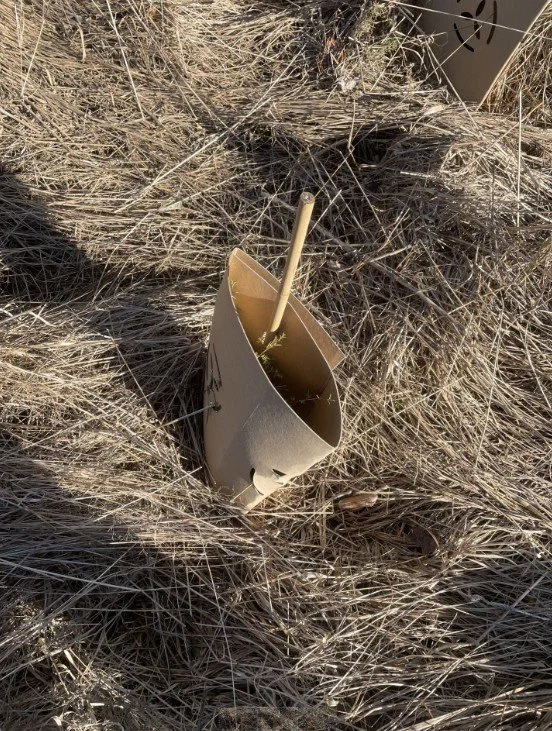
We had been very careful when putting the plants in, that we had just put grasses and toetoe in the flood channels. We didn’t put guards on these plants but those plants that we did guard, we made very sure the guards were well hammered in.
My theory was to face the apex of the guard into the flood flow to make the water go around the guard. However, interestingly, what we found was that those guards that faced the flood flow with the double edged back side of the guard (where the cane threaded through), actually divided the water flow much better and stood up to the flow. It makes sense, as that is the strongest part of the guard with its double layer. It is vital to have the cane in firmly to ensure the whole guard doesn’t lift out.
The ones with the apex facing the water flow showed a tendency to move around and move off the plant they were supposed to be protecting. They were still in place but the guard had swung with the water flow. You could get around this by putting an extra cane into the apex but that is all extra time and cost. Try facing the cane side of the guard in line with the water flow, if you are in a flood zone for best results.
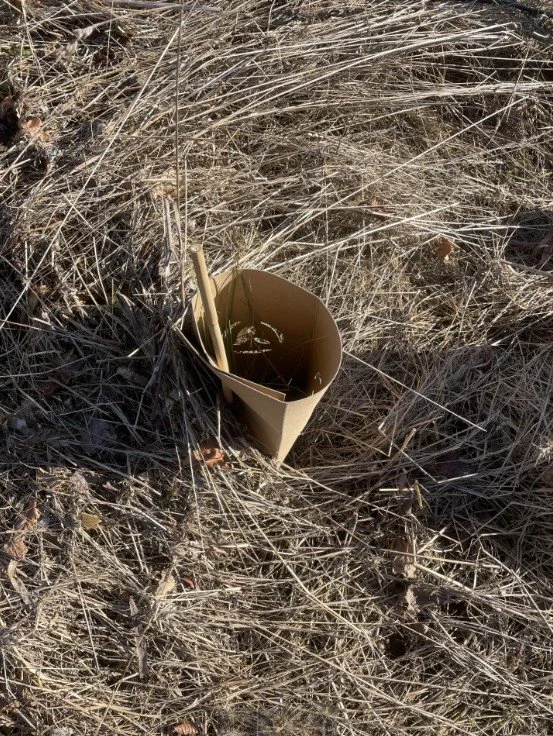
Correct alignment
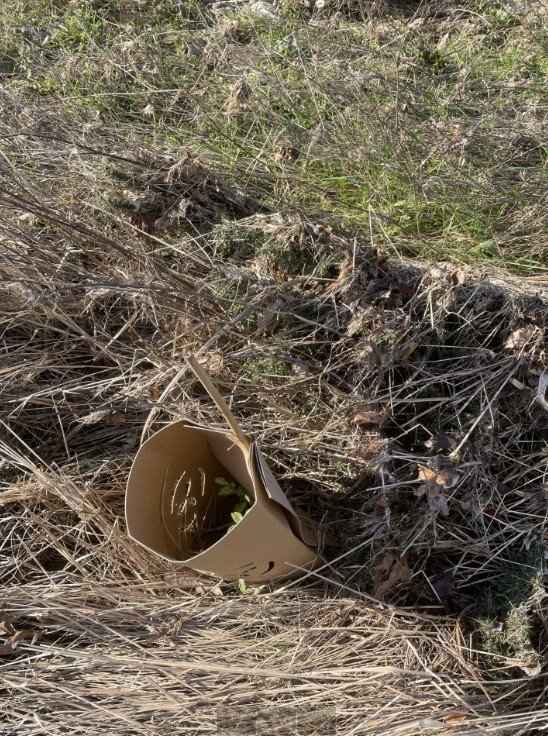
Correct alignment
Incorrect alignment
Plant of the Month
Phyllocladus trichomanoides, tānekaha, celery pine
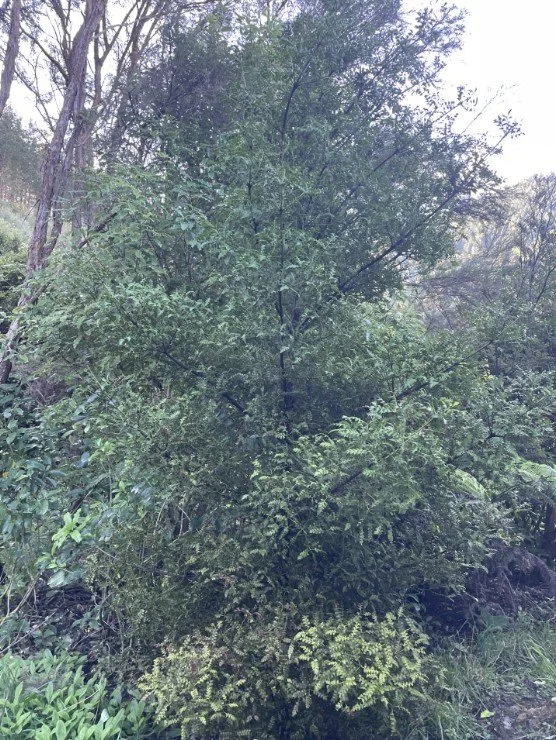
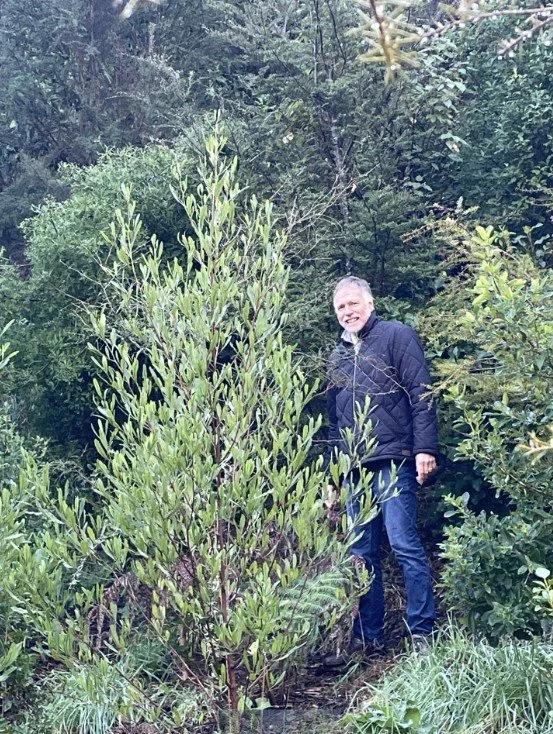
We revisited a site we began working on at Groom Creek in the Maitai Valley last week. It was so cool to see the size of the trees we planted. One of my favourites is the tānekaha or celery pine.
The tānekaha is a majestic forest tree, growing up to 30m tall with a distinct pyramidal shape and a trunk diameter of up to 1 m. It has slender, spreading branches that grow in whorls. These flattened branchlets or phylloclades function as leaves and give the tree its name.
The bark is fairly smooth and a greyish colour. In the seedling stage it has narrow, flattened needle-like leaves 10-15 by 1-2 mm and these grow out into the distinctive phylloclades. These are compound, 6-10 cm long with two rows of regularly arranged segments with deep incisions and they often narrow to a point at the tip.
It forms cones, and the foliage looks somewhat like celery leaves hence the common name of celery pine. The pollen cones have a stalk of about 1 cm long that is crimson when young and turns purple as it matures. Pollen is released in spring and seeds mature the following autumn. These fleshy seed cones are an attractive bird food.
The timber was highly valued because of the strength and durability of the wood. It is amongst the most elastic and wind resistant timbers in the world. Tānekaha translates as “strongman” in Maori. The bark was used as a dye for flax, having been collected and pounded until it softened. It was then placed in a water bath along with the flax fibre and this was heated with stones until boiling and this process continued until the fibre to be dyed had taken up enough colour. The dye has a high tannic content so did not fade. The colour obtained was a reddish brown. Apparently the bark was used to dye soldiers uniforms in the First World War.
The inner bark was pounded and steeped in water and was used as a medicine for the treatment of dysentery and diarrhoea.
( Source: Treasures of Tane and Field Guide to New Zealand’s native trees.)
Weed of the Month
Lamium galeobdolon “Variegatum” Aluminum Plant or Artillery Plant
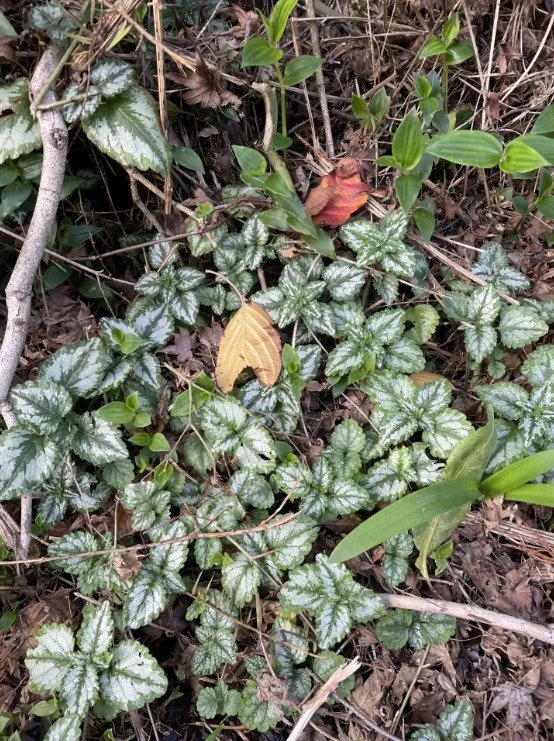
This is another garden escapee. It was introduced to New Zealand as an ornamental ground cover. It certainly achieves that very well. It is thought to have naturalized around 1988.
It grows rapidly, covering large areas of ground and forming a thick, dense mat. This then prevents other beneficial seedlings from establishing. It is shade tolerant and while often found on bush margins, it can invade much further into native bush areas.
It is spread by vegetative fragments and is often found in association with dumping of garden waste or through deliberate plantings.
The reason it has spread far and wide is that it is quite an attractive plant with a pleasant smell and good ground covering ability. It grows up to approximately 50 cm tall.
The leaves are oval and pointed with an almost mint-like appearance. They are hairy and coarsely toothed in opposite pairs with silver-grey markings on the upper surface. The stems are a purplish colour, square shaped and densely hairy on the angles.
It forms tubular, hairy lemon-yellow flowers from December to May. These are 20-25mm long and produced in dense axillary whorls. They do not appear to set seed, however.
Control by digging out and removing to landfill or burying deeply. Do not try to compost it.
Some recommend using metsulfuron-methyl year-round with follow up treatment every three months.
We do not recommend using metsulfuron anywhere near native plantings, especially if you have a porous soil as it has a long half-life.
EmGuard Update
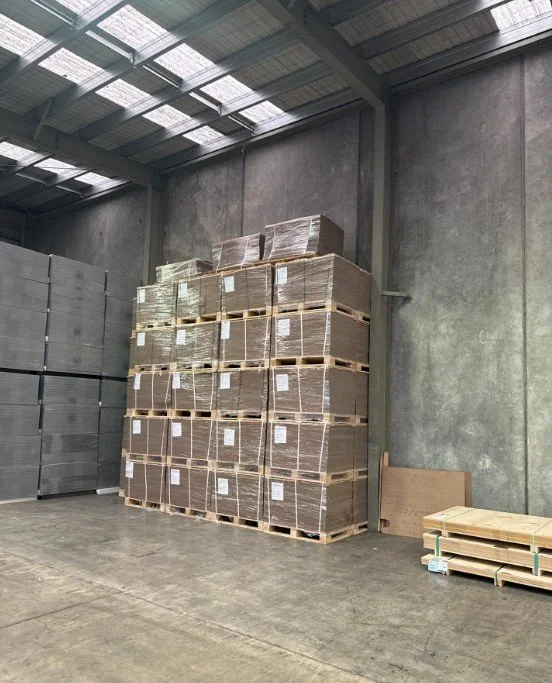
I have a very large stack of EmGuards stacked up that will hopefully cover the balance of the planting season.
The factory that made our guards in Hamilton has very sadly closed as of the end of June. We had a 9-year relationship with them, from going to them with a great idea back in 2017, to changing the whole restoration industry and expectations around plant survival. Many people have copied our idea since, but it is great to see the difference bio-degradable guards have made to the success of plantings from North Cape to Bluff. Also, not to forget the tons of plastic that has been prevented from entering the natural environment.
We have been hunting for an alternative board supply and are quietly optimistic that we have potentially found a suitable alternative. We are field trialing it at the moment. The key quality we are looking for is the rigidity of the board, alongside it’s longevity in New Zealand environmental conditions.
In the meantime, we have a good supply of guards, so please keep in touch if you know the numbers you require for your upcoming plantings, and we can earmark them for you.
Don’t forget that unfortunately we have had to raise our price for guards to $1.85 exc GST each. Freight has also increased and these costs can no longer be absorbed.
Wholesale rates apply for orders over 1500, so get in touch if you need higher numbers.
Jan’s details are:
Ph: 027 497 5838
Interesting Snippets

What we’ve been reading
I am very interested in humankinds’ need for beauty. We have been adorning ourselves and our surroundings since time began.
The need for beautiful things in inherent in us I think, and so the concept of Taonga is something we should treasure and celebrate in New Zealand.
We picked up a copy of “Icons Ngā Taonga, From the Museum of New Zealand Te Papa Tongarewa”, from Arty Books in Wellington
It showcases the collections held in the Museum of New Zealand, with superb illustrations and photos of a wide range of icons or taonga. It also has great explanations of each of the featured pieces.
It is the sort of book to keep on the coffee table and dip into regularly.
What we’ve been creating
Robin Sharmin talks in his book about the importance of creativity. Creativity adds meaning, shape, purpose and richness to our lives. It is part of continual growth.
So, in light of that, Robert spent an amazing weekend with Hape Kiddle, a world-renowned carver, doing a netsuke course at the Centre for Fine Woodworking. They also spent all their spare time creating other wonderful pieces.
Below is a water drop created by Robert with Hape’s tutoring. It is absolutely stunning. Water being essential to life, it felt very appropriate.
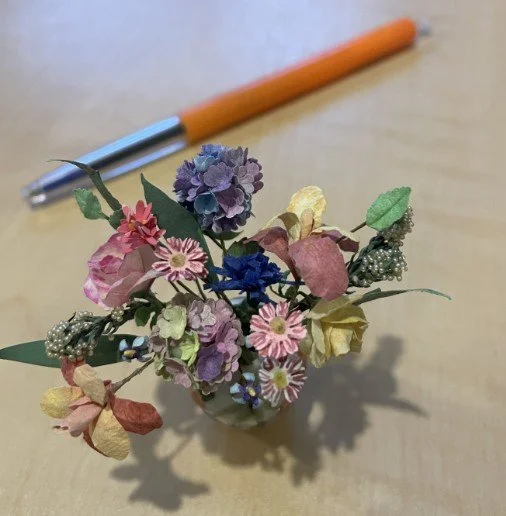
While Robert was carving, Jan was at a retreat with the Christchurch Miniatures Club learning the art of making miniature paper flowers with Kim Lineham. It was so absorbing and such creative fun. It certainly helped fulfil that need for beauty.

Conclusion
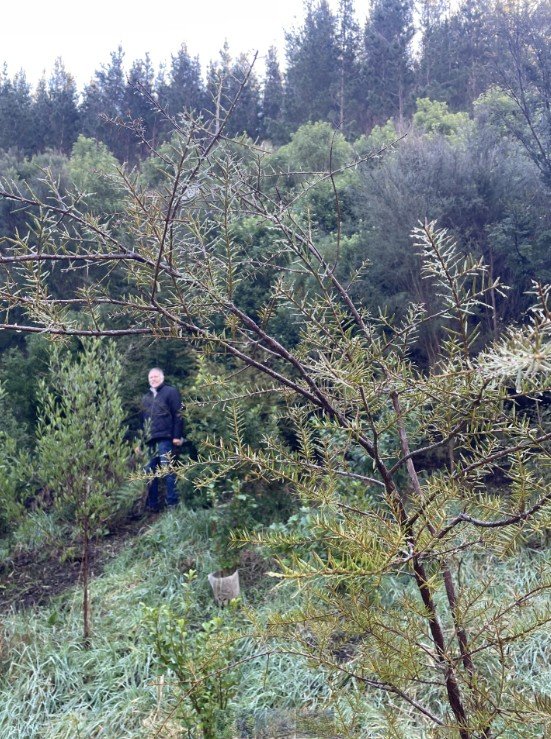
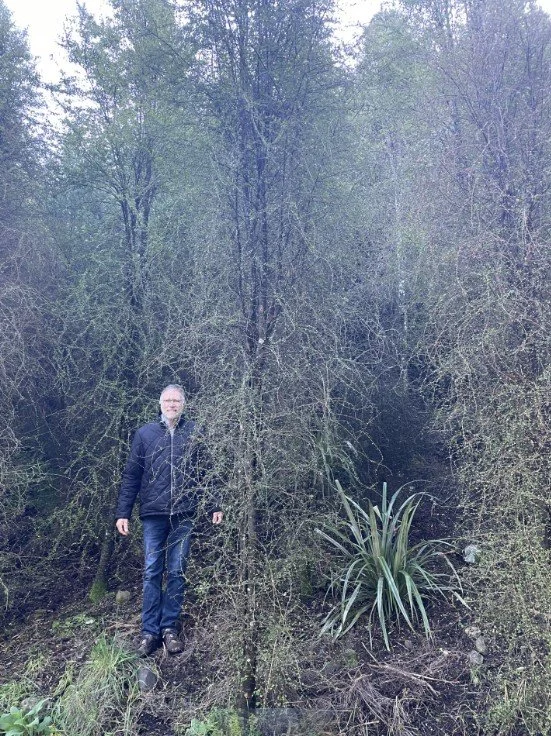
On the 1st of July it was a gorgeous day in Nelson, so we took a moment to visit one of our first major projects at Groom Creek in the Maitai Valley.
We started in 2016, with Robert clearing a steep hillside covered in gorse, Himalayan honeysuckle and old man’s beard.
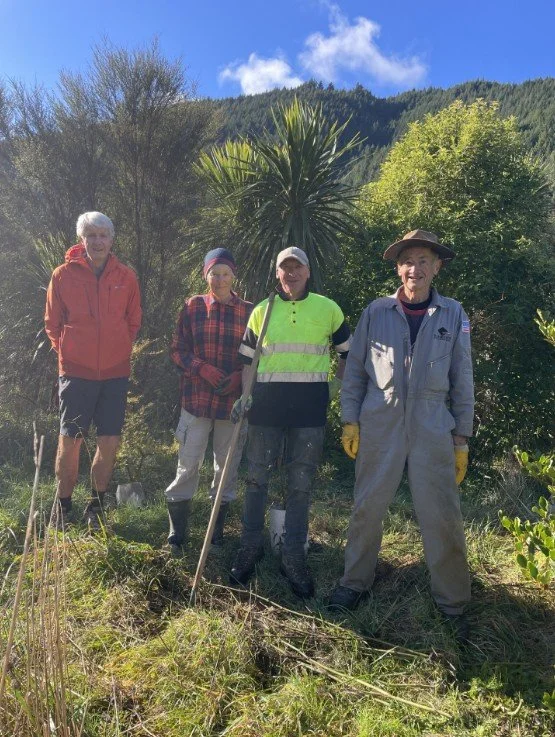
We headed into the site that morning, to find a lovely group of volunteers beavering away on clearing around trees, planting and mulching. Bill, Ben, Sharen and Tim - thank you. What a perfect place to be on such a nice day.
It was thrilling to see the legacy we began creating 10 years ago and how it is progressing.
The thing that I was most pleased to see was that the understory was starting to develop, as the original trees form the upper canopy. Enhanced in part by the team of volunteers and assisted by birds, the ferns and other ground cover plants are appearing.
It truly had the feel of a forest, so if you want to be inspired by what can be achieved in only around 10 years, head on up to Groom Creek. It was a bare, stony paddock and rough, weed covered hill when we started. It is also somewhat of a memorial to one of our contractors, Pete Crowle. He was a major part of this project and sadly passed away suddenly with a heart attack just over 3 years ago. He would be so proud of the place now.
Speaking of legacy, the rich list was published last month. If anyone from that list wants to leave a real legacy that will outlast all of us, please get in touch. We have some very cool restoration projects for the community that could do with a boost😊
If you have any projects in mind and would like to talk further, give us a call or pop in and see us.
We look forward to hearing from you!