
FuturEcology & EmGuard ™ February 2026
By Jan Fryer
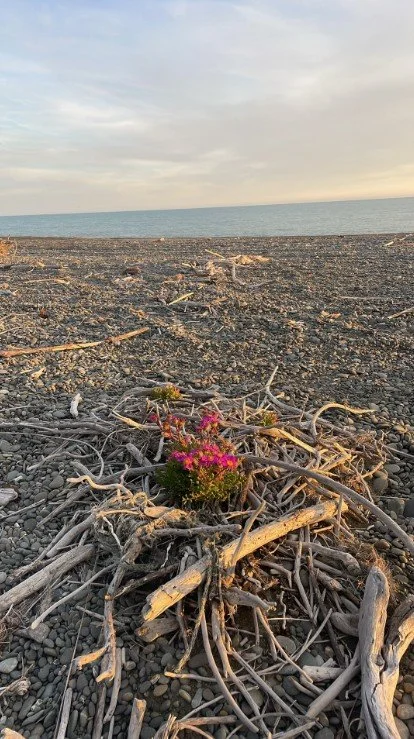
Welcome to our first newsletter of 2026 and just like that it is already February. The children are back at school, so of course, summer has finally arrived.
We enjoyed a break over Christmas, exploring the Rakaia and Ashburton districts. I recommend a trip to the Ashburton Domain if you find yourself in that part of the world. It covers an area of 37 hectares and was established in the 1870’s, so there are some magnificent trees. It includes lakes, open spaces, sports facilities, rose gardens, and formal displays. It is a credit to the Ashburton District Council and their team of professional parks people. Their expertise in showcasing their extensive plant knowledge and ability to create wonderful spaces for the use and enjoyment of the community is exceptional.
We also visited an interesting reserve at the base of Mt Hutt. The Awa Awa Rata Reserve is a 2 hectare reserve at the end of McLelland Road, renowned for its mature, colourful rhododendrons and azaleas mixed in with natives. We missed the peak season of October/November, but it is still worth taking a detour to visit. Again, the mix of natives and exotics provides an interesting example of a novel landscape and how these areas may form part of our future parks and reserves planning.
We started this year with a bang. Time was spent releasing lots of trees from their competition with grasses, after a bumper spring and wet summer growing season. This is an absolutely crucial part of any regeneration project and should always be factored into all planting regimes. If you are going to struggle with maintenance, then it may pay to look at planting fewer plants or planting at closer spacings. Then your trees will create a canopy cover quickly and that suppresses grass.
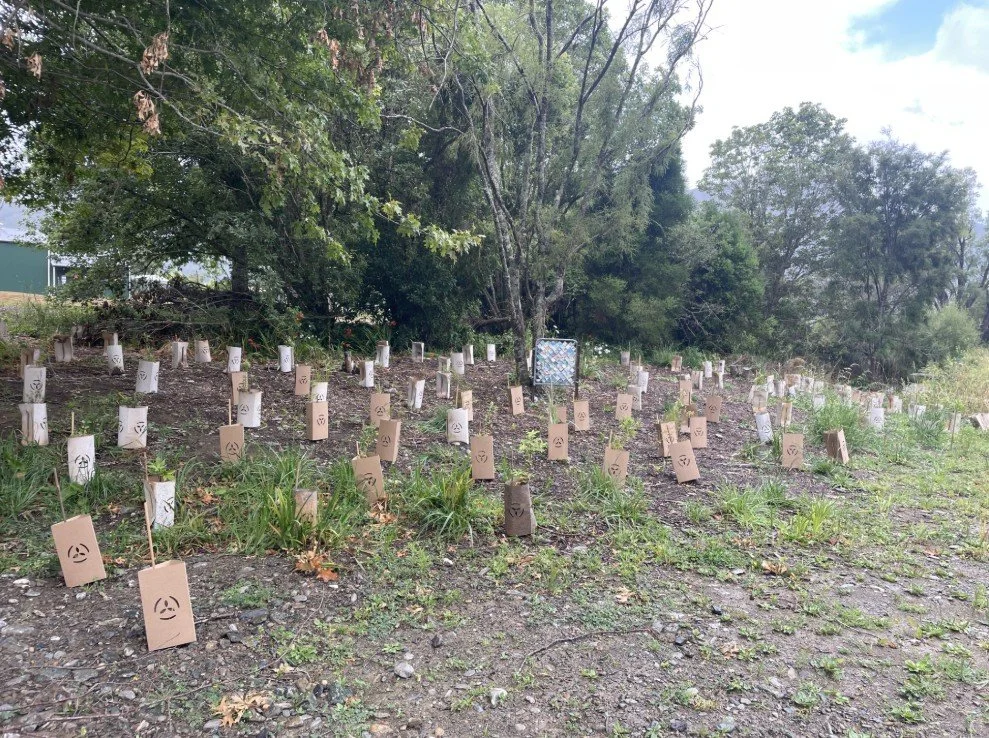
This has been particularly evident in the 2023 trial area at Wakapuaka, where we spent some time working this month. The trial categorically shows the benefit of using plant guards. The area where there were no plant guards used, has only a few straggly trees with only about 20% survival. When compared to the areas that were guarded, mulched and closely planted, the difference is very evident. The trees in the best performing areas are nearing 2m tall and have closed together, with virtually no weeds present. If anyone is visiting the Nelson area, we are more than happy to take you for a visit to the trial.
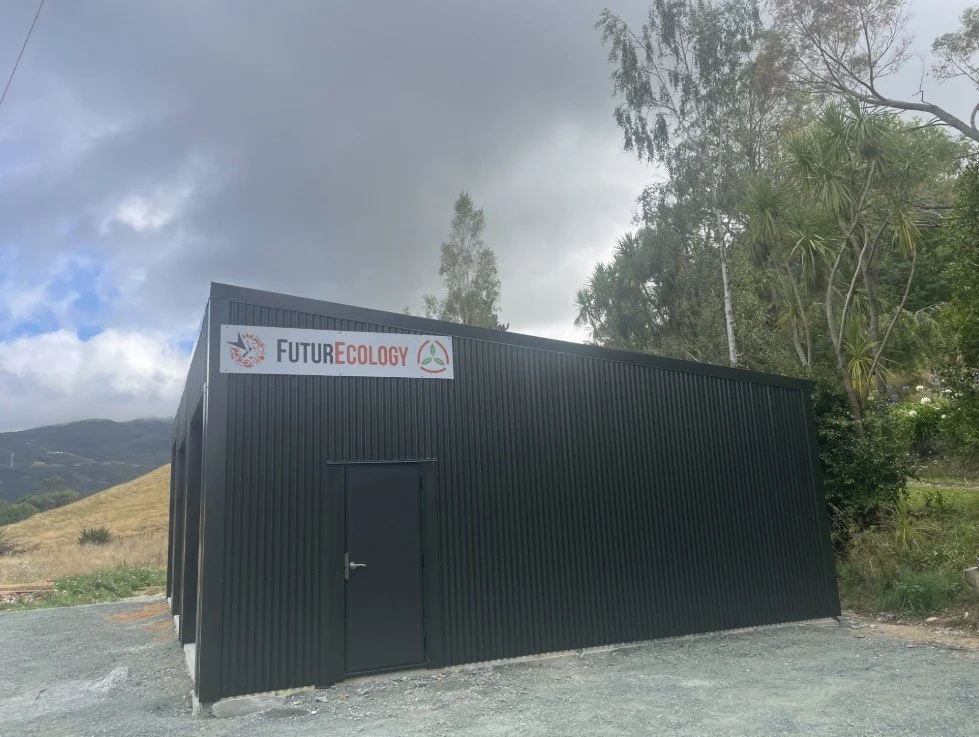
Our new shed is more or less completed. It just needs its doors, so we are very much looking forward to sorting all our piles of stuff and working from a properly dedicated space. A huge shout out to ITM in Motueka and The Shed Specialists for a job well done.
We welcome visitors, but it is best to make an appointment by phoning first, just to ensure someone is here. We are spending lots of time in the field at present, trying to stay on top of weeds.
Trial Update
By Jan Fryer
As mentioned above, the planting trial done in 2023 by Forever Trees at the Cable Bay Adventure Park is well worth taking a look at.
It has been a real eye opener for us and confirms many of our ideas.
Plant guards are crucial to a successful planting.
Plant in groups of like trees. Like with like.
The right plant in the right place is a key part of successful planting.
If you have limited maintenance time or budget, aim for a closer spacing eg 0.5 to 1m spacing.
Guarding and mulching your site will optimise the success rate and speed of growth.
Regular maintenance, particularly controlling grass and any climbing weeds like convolvulus or old mans beard is crucial to any successful planting.
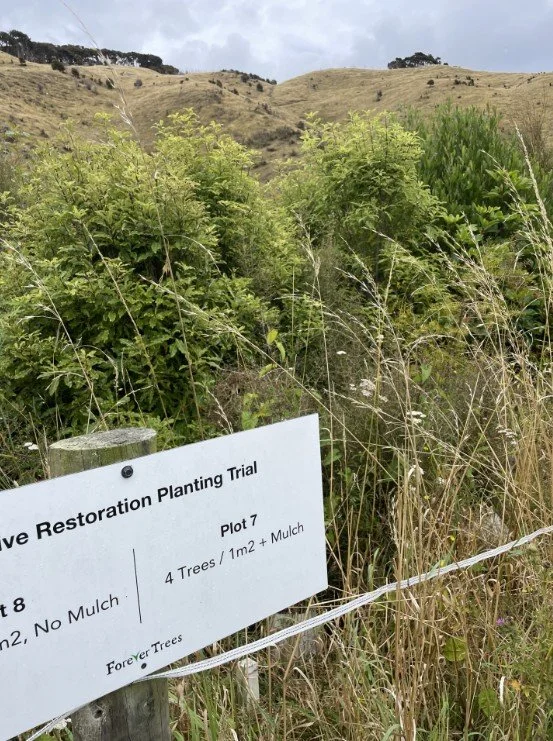
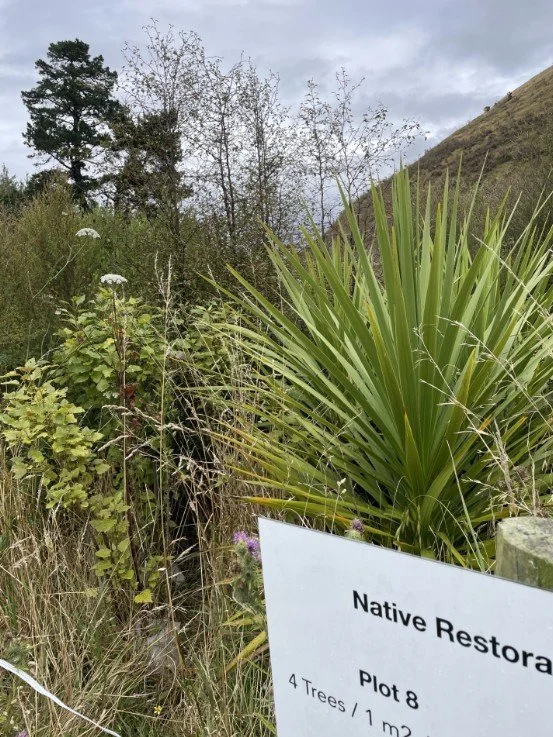
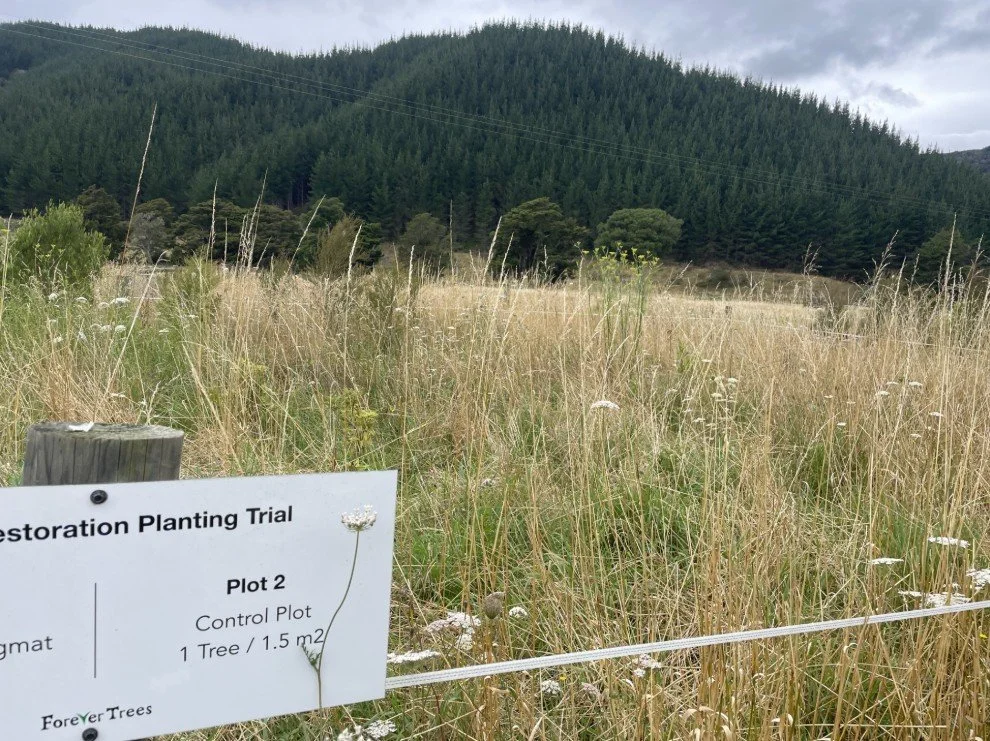
Control site: No guards.
Plant of the Month
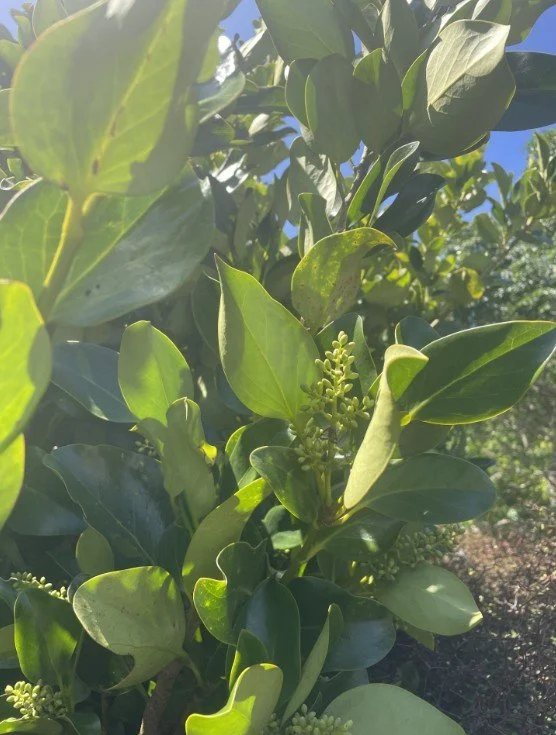
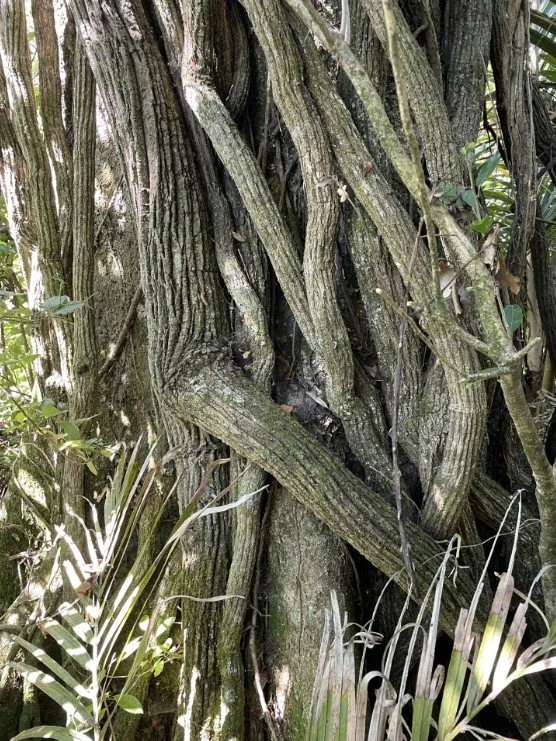
Griselinia lucida – Puka
By Jan Fryer
We have been working in a remnant lowland forest in the past week and came across a wonderful specimen of Griselinia lucida.
These trees naturally occur in damp lowland forests. In the North Island, they tend to be at higher altitudes. They are also widespread in the South Island, appearing as far south as North Canterbury in the east and South Westland in the west of the South Island.
In its natural state, it is an epiphyte, with distinctive fluted roots that descend from the host tree that the plant is growing on.
It has large, asymmetrical, shiny dark yellow-green leaves. These are 10-15 cm long and 5-12 cm wide, with one edge being a little longer than the other at the base. The leaves are arranged on the stem in an alternate pattern.
The flowers are small and a greenish colour, borne on slim stems from late spring to mid-summer. Dark purple berries form in mid-summer and ripen from autumn to winter.
It is particularly palatable to deer, so is under threat in many areas that are heavily browsed by deer.
However, if you have an area with dappled shade, it is a great addition to your planting. We do have them growing well in full sun on our property, but they will need protection from frost in the first couple of years.
Weed of the Month
By Jan Fryer
I have just been looking back over the last couple of years of newsletters at all the weeds we have covered. What a wide range of weeds we have to contend with! Our greatest issues at the moment are convolvulus, old mans beard and banana passionfruit. All of these are climbing vines and so have the ability to absolutely smother any plants that they grow over.
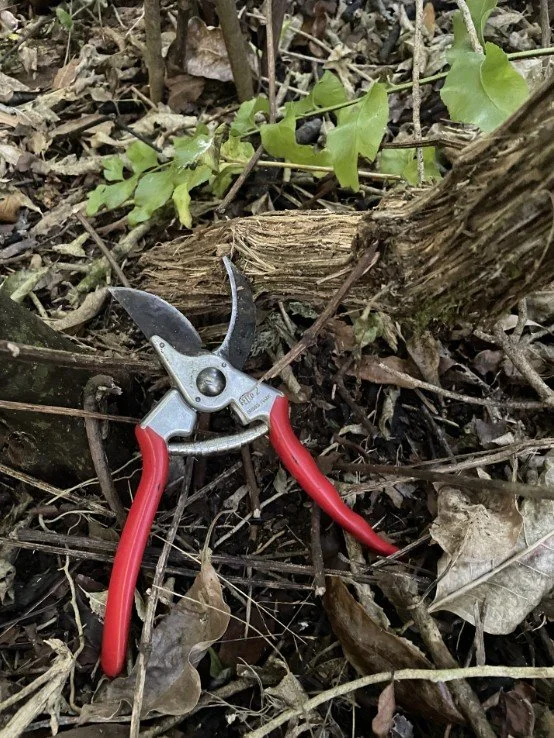
We have found that hand controlling with a flax cutter, secateurs and Cut N Paste Gel is our primary focus. We then spray what we can on the ground as a secondary control measure. Persistence is all I can recommend.
Greater Burdock - Articum lappa
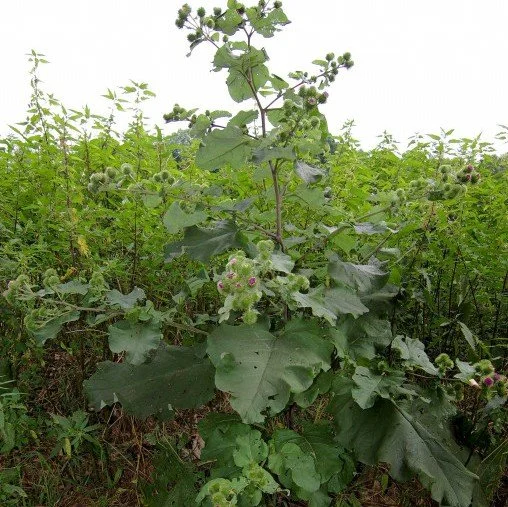
Image: Plantiary
This is an interesting weed that we have been coming across, particularly in areas that were flooded back in 2022.
It looks somewhat like a large rhubarb plant, growing up to 3m tall, with a long, fleshy taproot.
It is a biennial plant with large, alternating wavy edged leaves that have a long petiole and slightly hairy underside.
Flowers are in clusters, with a thistle-like appearance. They are a bright purple colour, appearing in mid-summer. The mature seed heads are spherical and brown coloured, with many bracts with a hooklike structure that will adhere to clothing, wool or fur. Hence their ability to be distributed far and wide. These burrs can cause skin irritation and possible respiratory problems.
Interesting fact: the burrs inspired the development of velcro after a Swiss engineer, George de Mestral, studied the tiny burrs under a microscope in 1941. He then created a synthetic version of a hook and loop fastener that was patented to become the velcro we know today.
The root is edible once cooked and is made into a drink in Britain. It is popular in Asian cuisine.
Because it is used for culinary purposes, any control must be done carefully. We tend to cut it off at the base and paint it with Cut N Paste Gel, so it is clearly obvious that it has been treated. Manual control is challenging because of the depth of the taproot. Try to do any control before seed heads mature.
Projects Update:
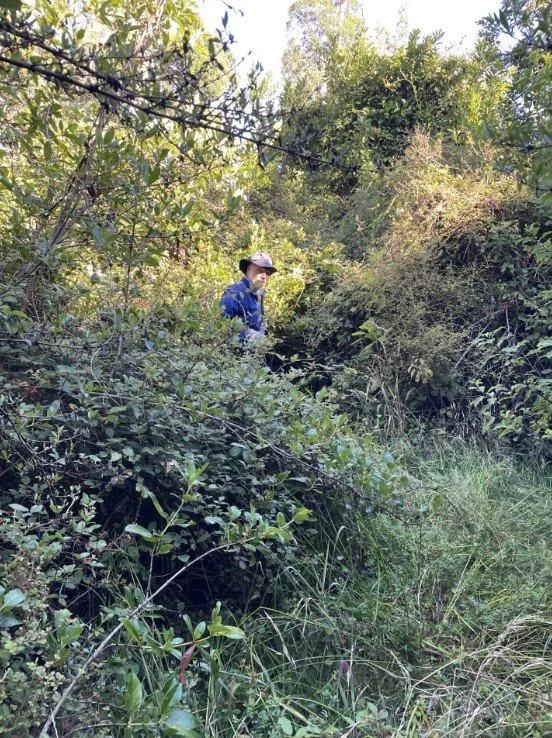
We have been working in a mature lowland forest in the Delaware Bay area this month. The severe easterly storms we had in late December were very damaging on this remnant forest, which is devastating to see.
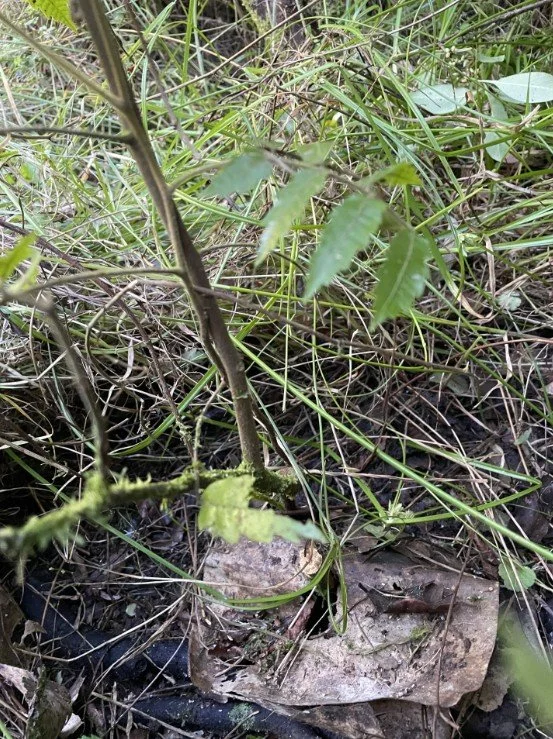
Our focus in this area is on vine weed control, particularly OMB, banana passionfruit and blackberry. We have also been working on controlling mahonia, a relative of barberry, since 2018. The seeds appear to be quite long-lived, so be very careful of it if you come across any in close proximity to native forest.
We have done supplementary planting in this forest since 2018, and it was in here that we used our very first EmGuards. I came across one as I crawled through the forest floor last week. The tree it protected is now probably more than 3 m tall. Well done little EmGuard.
EmGuard Update
By Jan Fryer
Tis the season to start to confirm your winter planting projects.
It pays to get your plant orders in with your local nurseries and your EmGuard orders in nice and early, to ensure there are no hold ups.
Freight is one of our ongoing challenges. The old Aratere ferry has been sitting at anchor in Tasman Bay since before Christmas, and with storms and mechanical breakdowns, moving things across Cook Strait has its moments.
We try to keep reasonable stock on hand at all times, but if you have a large project in the planning stages, please let us know.
EmGuards are the toughest and most durable guards on the market. They are the original biodegradable guards, designed by us as contractors, for their longevity and ease of use. They only require one stake and are the heaviest grade board available, making them much less likely to buckle and damage plants, if installed correctly.
We can make a lighter grade board guard that requires two stakes, if that is what you are looking for. Minimum quantities for that grade however are 15,000. Please let us know if that is what you may require for your project.
If you confirm your orders before 31 March 2026, you will get your product at the 2025 prices.
Jan’s details are:
Ph: 027 497 5838
Wasp War
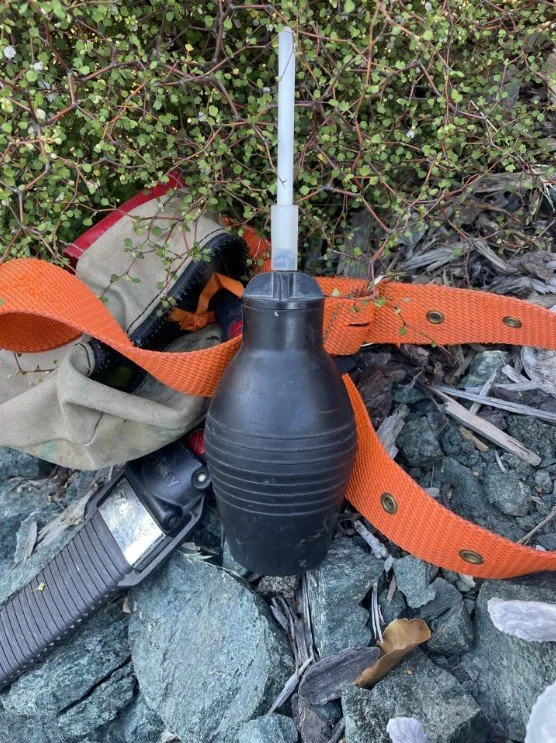
It’s that time of year when the wasp population starts to explode. Robert killed the first German wasp nest of the season on Tuesday and said it was very active. I note that they were very much into taking protein last week, so get your Vespex bait out now.
Paper wasps have been very active since the end of last year and we have noted that their nests have started to explode in size in the last 2 weeks. I carry a “Dust to Dust” puffer with me everywhere when we are in the field. In young plantings, the wasps tend to nest in the guards and in 3-4 year old plantings, we have found them at about elbow height in the trees. In fact, my very first day in the field after the Christmas break resulted in a wasp sting on my elbow.
Be very vigilant for wasps at all times when you are out in the field.
Interesting Snippets

What we’ve been eating - Cinnamon Scrolls
While camping at Elaine Bay for Nelson Anniversary Weekend, we made these in the portable pizza oven.
Delicious. https://nz.ooni.com/blogs/recipes/pizza-dough-cinnamon-rolls
What we’ve been reading
When Breath Becomes Air - Paul Kalanithi

Rather a heavy read for a summer holiday read, but one I would recommend to anyone, to remind us of the importance of reflecting on the meaning of life.
Dr Paul Kalanithi was a neurosurgeon on the verge of completing a decade of training when he was diagnosed with inoperable lung cancer at the age of 36.
It chronicles his transformation from a medical student in search of what makes a virtuous and meaningful life, into a neurosurgeon working in the core of human identity – the brain.
It is a memoir about his life and his experience, first as a doctor, then as a patient facing a terminal illness.
It has been described as a moving meditation on mortality by a gifted writer whose duel perspectives of physician and patient provide a singular clarity.
It was absolutely gripping, but I did have to take breaks to breathe and wipe the tears away. It is good to be reminded of our mortality, but also what is our purpose of being and what legacy we want to leave.
Conclusion
By Jan Fryer
What a challenging start to the year it has been already. Windstorms, floods, landslips and the terrible tragedy at Welcome Bay and Mt Maunganui. Our thoughts go out to all the people affected by these events.
It also highlights the importance of what we do in terms of restoring the natural environment. For me, the other thing it highlights, is our need to make our communities more resilient and more in charge of their own destinies.
We need to teach understanding weather patterns in schools, how to read a situation and how to react to it. We can’t be waiting for “experts” to tell us what to do and when, particularly in natural disasters. Make sure you have a plan for your own place and family, and be ready to act in the event of a flood, a fire, a slip, a sewerage spill, an earthquake. In New Zealand, we can guarantee that one of those events is likely to happen in your area, so be prepared.
In the meantime, make the most of the summer weather we are enjoying at the moment. All the best for the coming year.
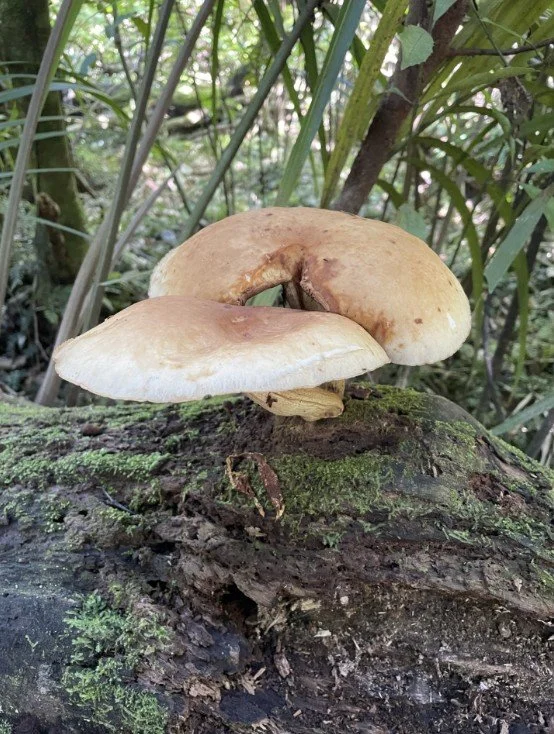
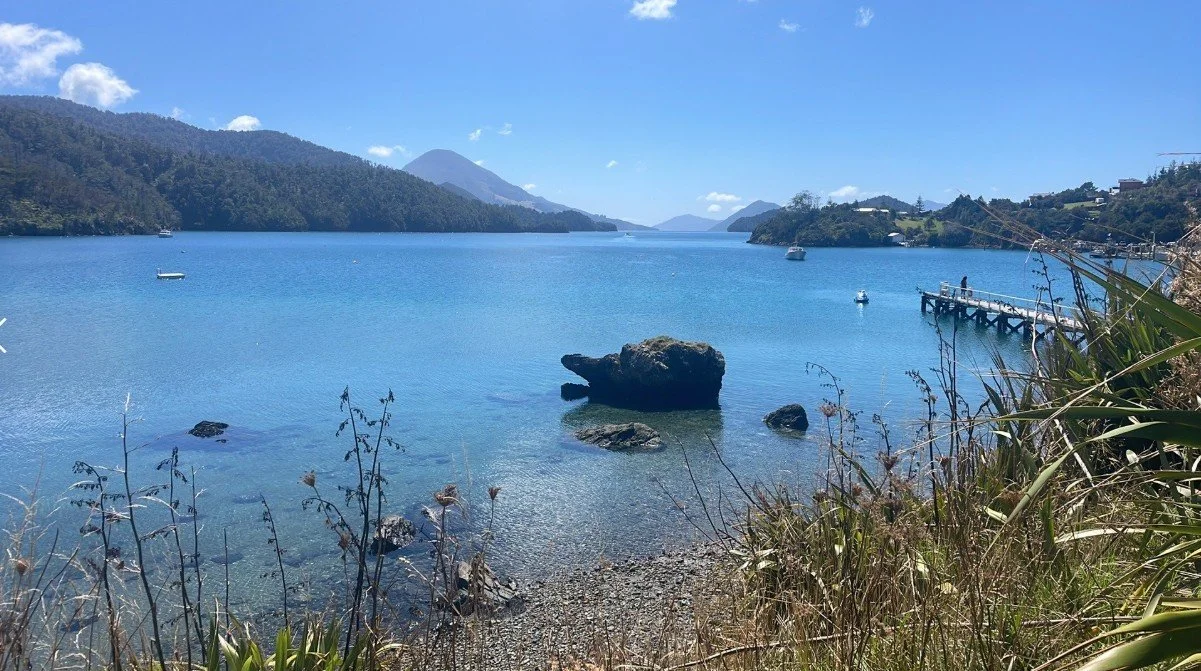
Our wonderful country!
If you have any projects in mind and would like to talk further, give us a call or pop in and see us.
We look forward to hearing from you!